Visualization of Polyhedra with Virtual Reality (VR) in A-frame
author: Paulo Henrique Siqueira - Universidade Federal do Paraná
contact: paulohscwb@gmail.com
versão em português
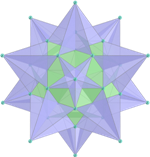 Non-convex deltahedra
Henry Martyn Cundy identified 17 concave deltahedra (1952), leading to the discovery published by Roger Kaufman (2008) that there are at least 40 examples of this type. Deltahedra are composed only of equilateral triangles, and there are only eight convex deltahedra: tetrahedron, octahedron, icosahedron, triangular dipyramid (Johnson solid J12), pentagonal dipyramid (J13), snub dysphenoid (J84), triaugmented triangular prism (J51), and gyroelongated square dipyramid (J17).
This work shows some non-convex deltahedra modeled for visualization in Virtual Reality.
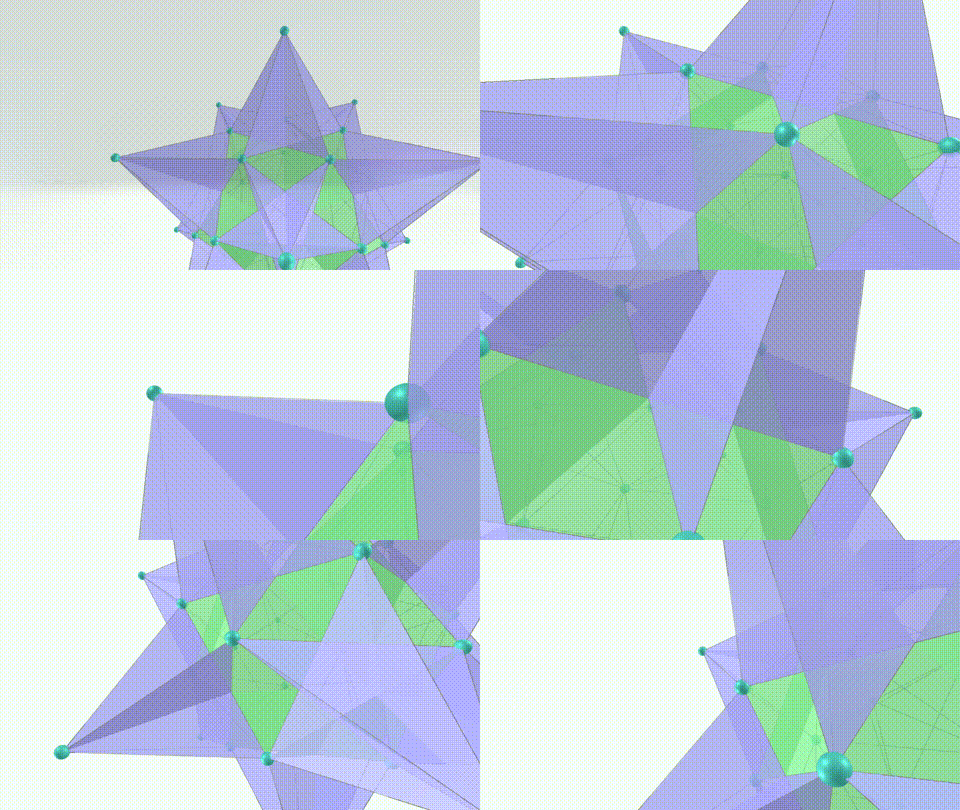
3D models
1. Augmented tetrahedron
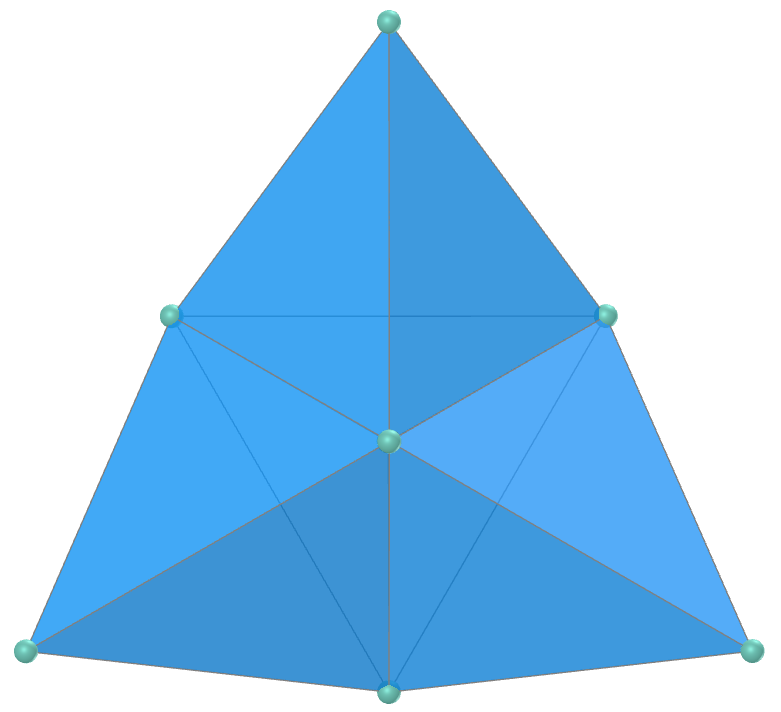
This deltahedron is constructed from a regular tetrahedral core, to which tetrahedral “caps” (augmentations) are attached on its four faces.
faces: 12 | edges: 18 | vertices: 8
2. Gyraugmented tetrahedron
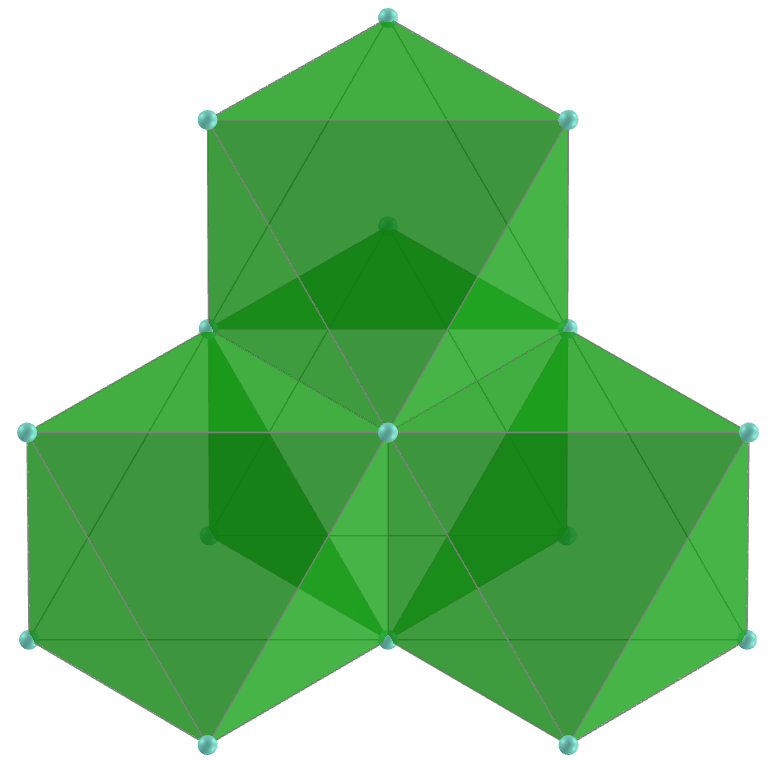
This deltahedron is constructed from a regular tetrahedral core, to which octahedral “caps” (augmentations) are attached on its four faces.
faces: 28 | edges: 42 | vertices: 16
3. Augmented octahedron
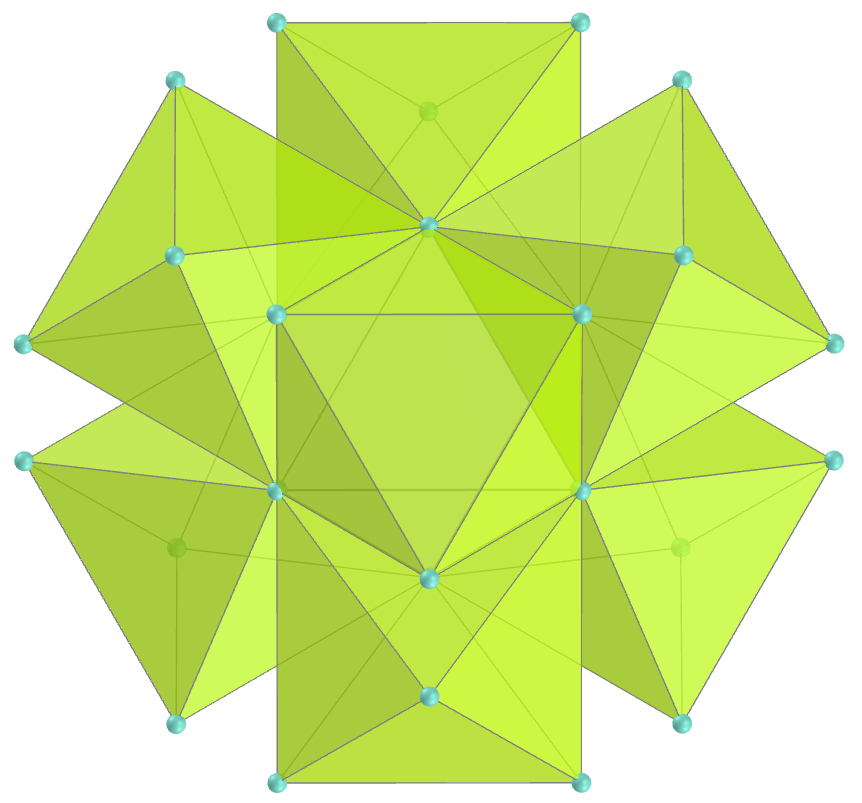
This deltahedron is constructed from a regular octahedral core, to which octahedral “caps” (augmentations) are attached on its eight faces.
faces: 56 | edges: 84 | vertices: 30
4. Excavated octahedron
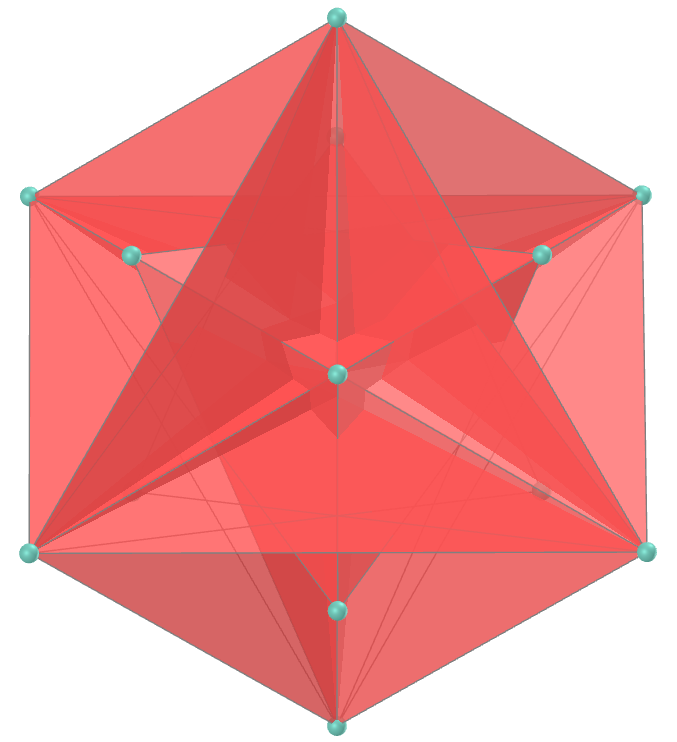
This deltahedron is constructed from a regular octahedral core, into which regular tetrahedrons are excavated on its eight faces.
faces: 24 | edges: 36 | vertices: 14
5. Augmented cube
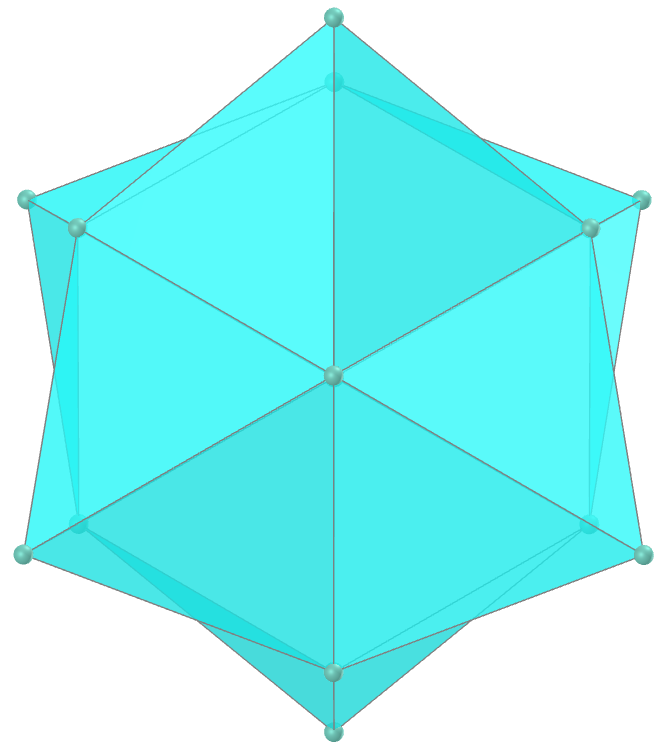
This deltahedron is constructed from a regular cubic core, to which square pyramid-shaped “caps” (augmentations) are attached on its six faces.
faces: 24 | edges: 36 | vertices: 14
6. Excavated cube
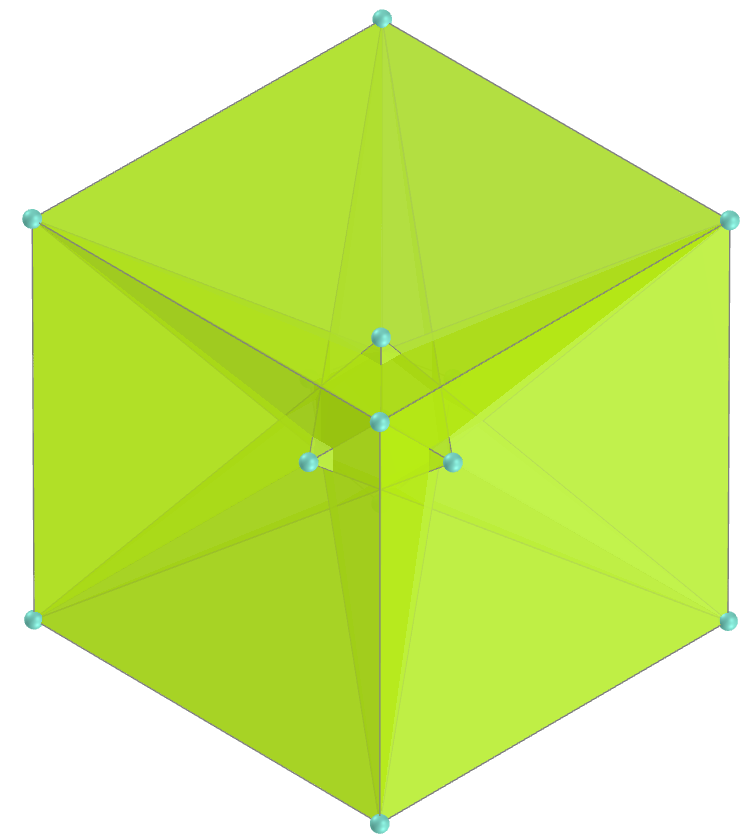
This deltahedron is constructed from a regular cubic core, into which square pyramids are excavated on its six faces.
faces: 24 | edges: 36 | vertices: 14
7. Excavated dodecahedron
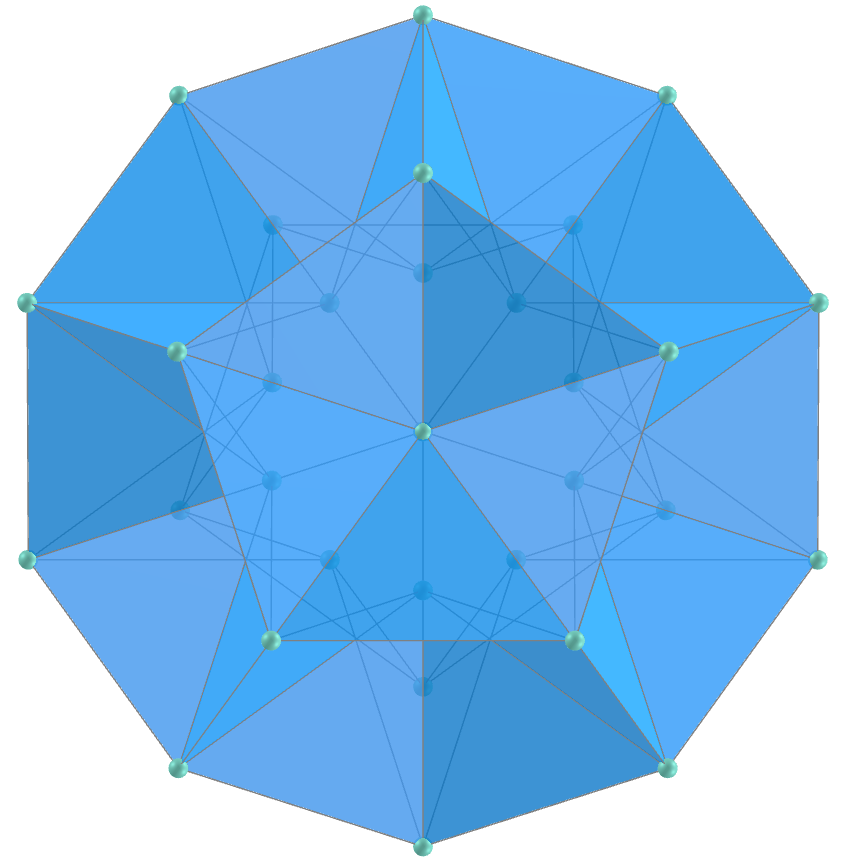
This deltahedron is constructed from a regular dodecahedral core, into which pentagonal pyramids are excavated on its twelve faces.
faces: 60 | edges: 90 | vertices: 32
8. Augmented dodecahedron
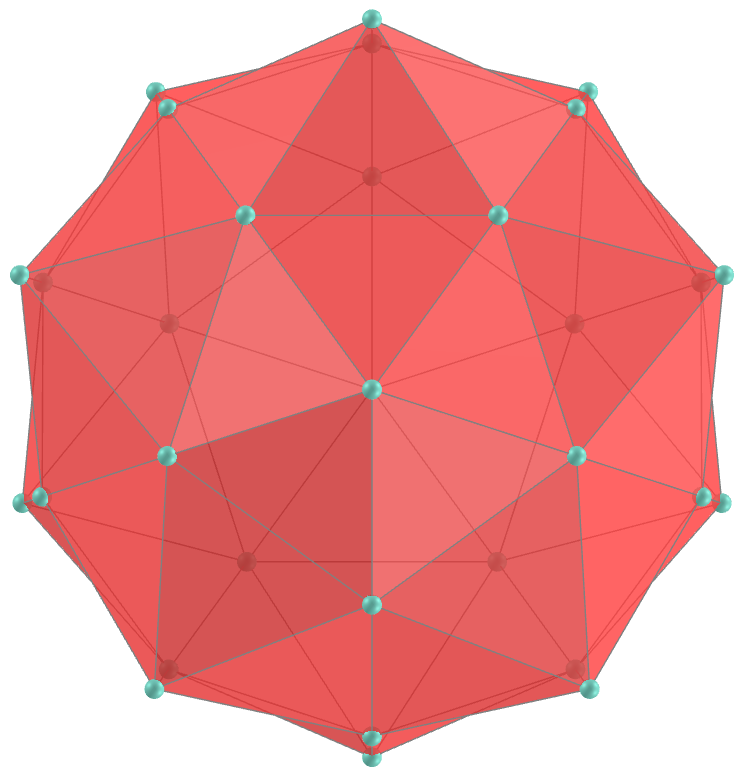
This deltahedron is constructed from a regular dodecahedral core, to which pentagonal pyramid-shaped “caps” (augmentations) are attached on its twelve faces.
faces: 60 | edges: 90 | vertices: 32
9. Augmented snub dodecahedron
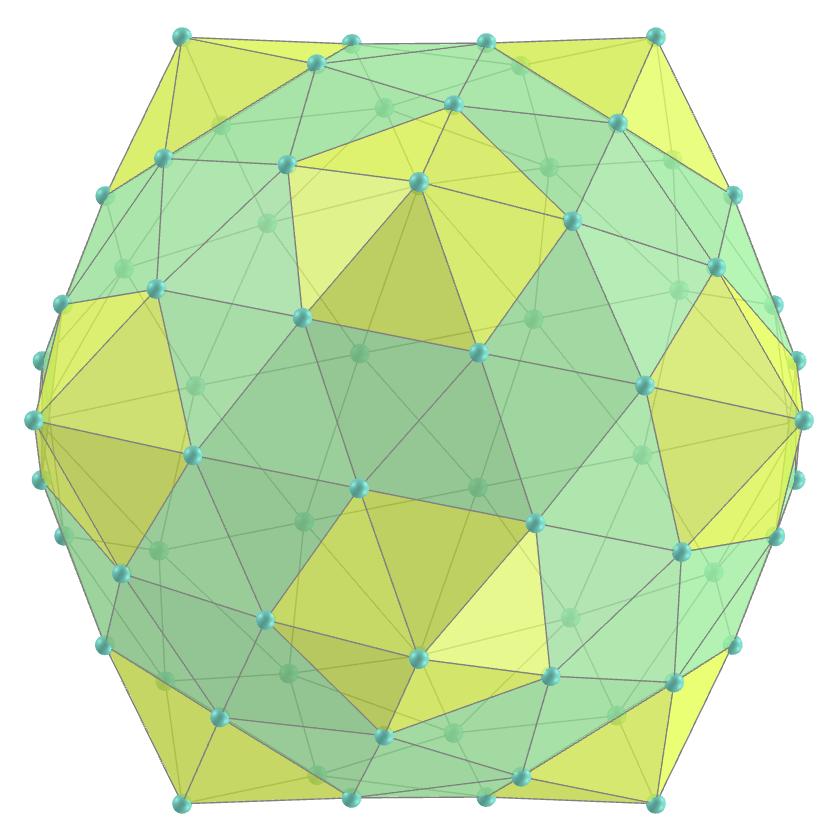
This deltahedron is constructed from a regular snub dodecahedral core, to which pentagonal pyramid-shaped “caps” (augmentations) are attached on its twelve pentagonal faces.
faces: 140 | edges: 210 | vertices: 72
10. Excavated snub dodecahedron
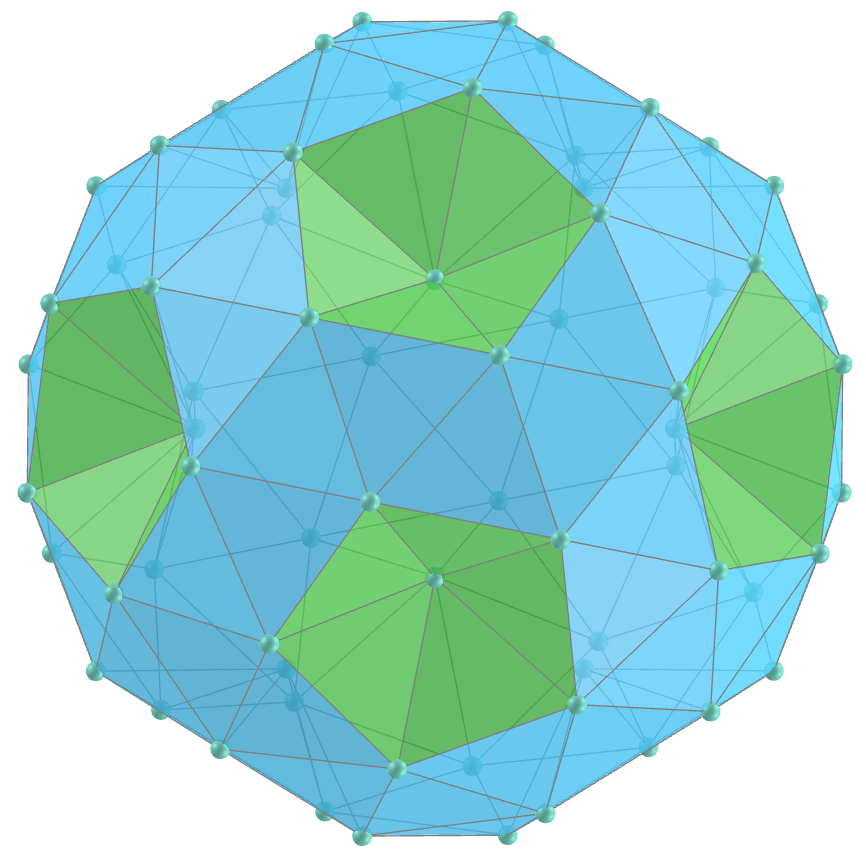
This deltahedron is constructed from a regular snub dodecahedral core, to which pentagonal pyramids are excavated on its twelve pentagonal faces.
faces: 140 | edges: 210 | vertices: 72
11. Augmented rhombicuboctahedron
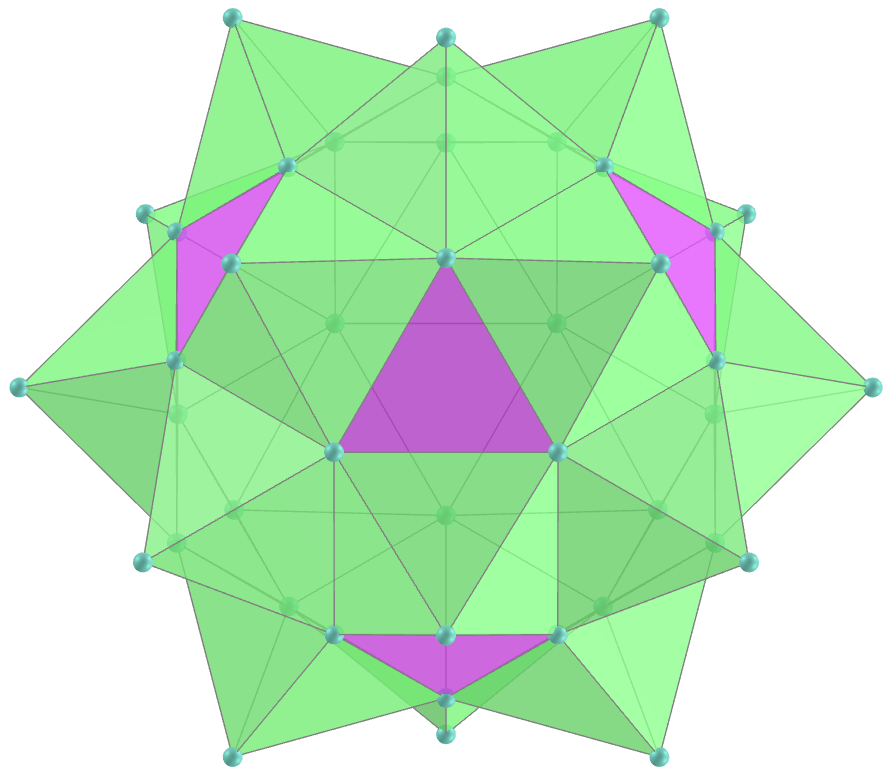
This deltahedron is constructed from a rhombicuboctahedron core, to which square pyramid-shaped “caps” (augmentations) are attached on its square faces.
faces: 80 | edges: 120 | vertices: 42
12. Excavated rhombicuboctahedron
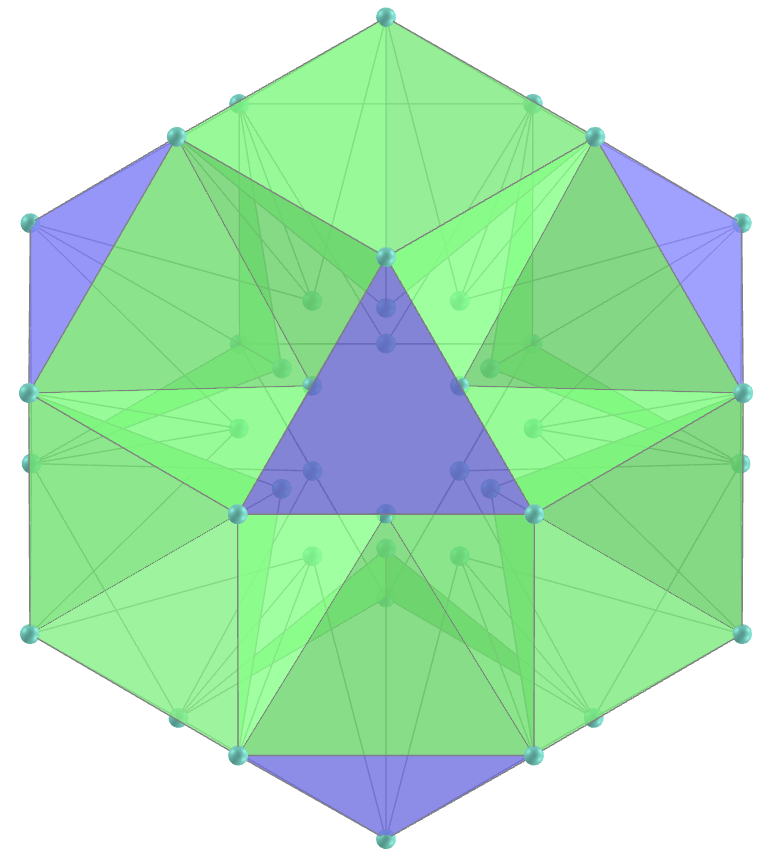
This deltahedron is constructed from a rhombicuboctahedron core, to which square pyramids are excavated on its square faces.
faces: 80 | edges: 120 | vertices: 42
13. Excavated icosidodecahedron
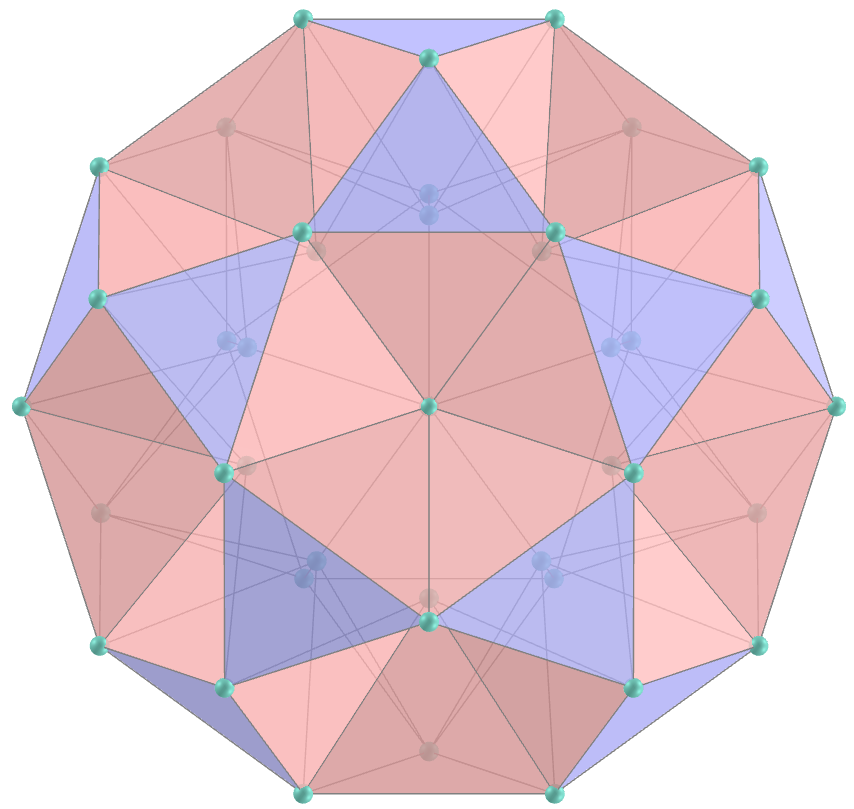
This deltahedron is constructed from a icosidodecahedron core, to which pentagonal pyramids are excavated on its pentagonal faces.
faces: 80 | edges: 120 | vertices: 42
14. Augmented snub cube
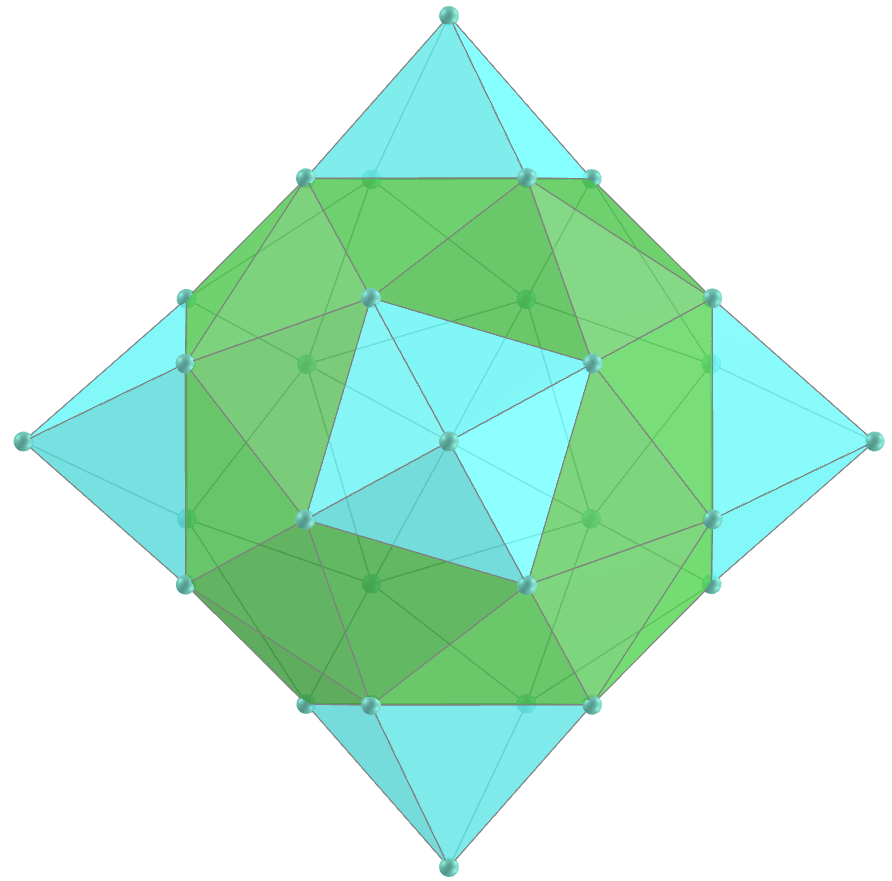
This deltahedron is constructed from a snub cube core, to which square pyramid-shaped “caps” (augmentations) are attached on its square faces.
faces: 56 | edges: 84 | vertices: 30
15. Excavated snub cube
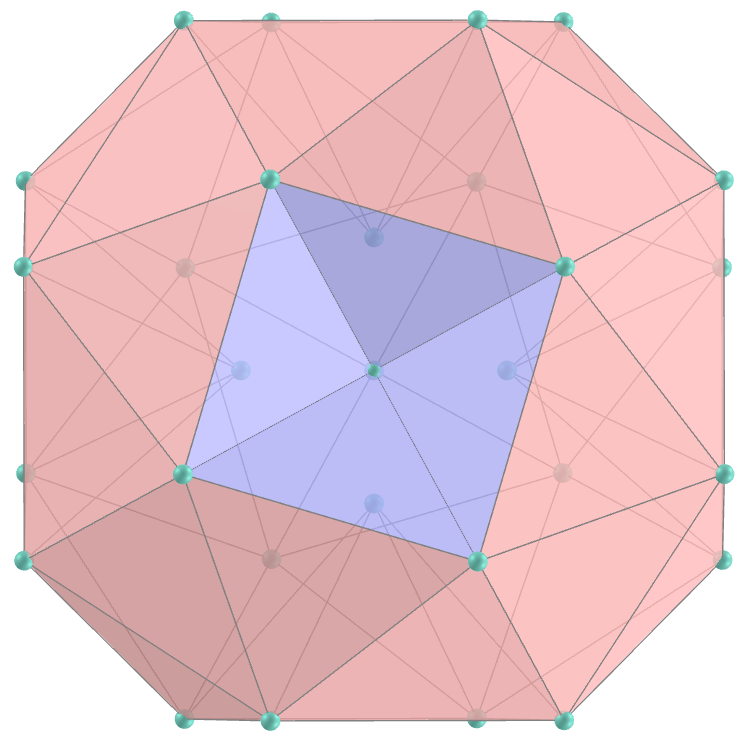
This deltahedron is constructed from a snub cube core, to which square pyramids are excavated on its square faces.
faces: 56 | edges: 84 | vertices: 30
16. Excavated small snub icosicosidodecahedron
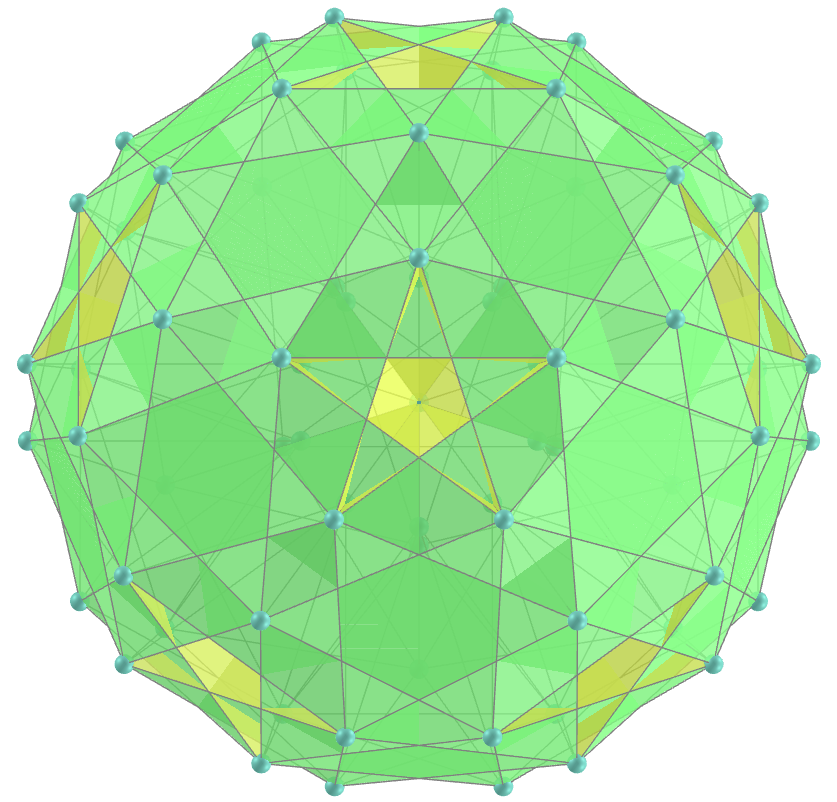
This deltahedron is constructed from a small snub icosicosidodecahedron core, to which pentagrammic pyramids are excavated on its pentagrammic faces.
faces: 160 | edges: 240 | vertices: 82
17. Augmented small snub icosicosidodecahedron
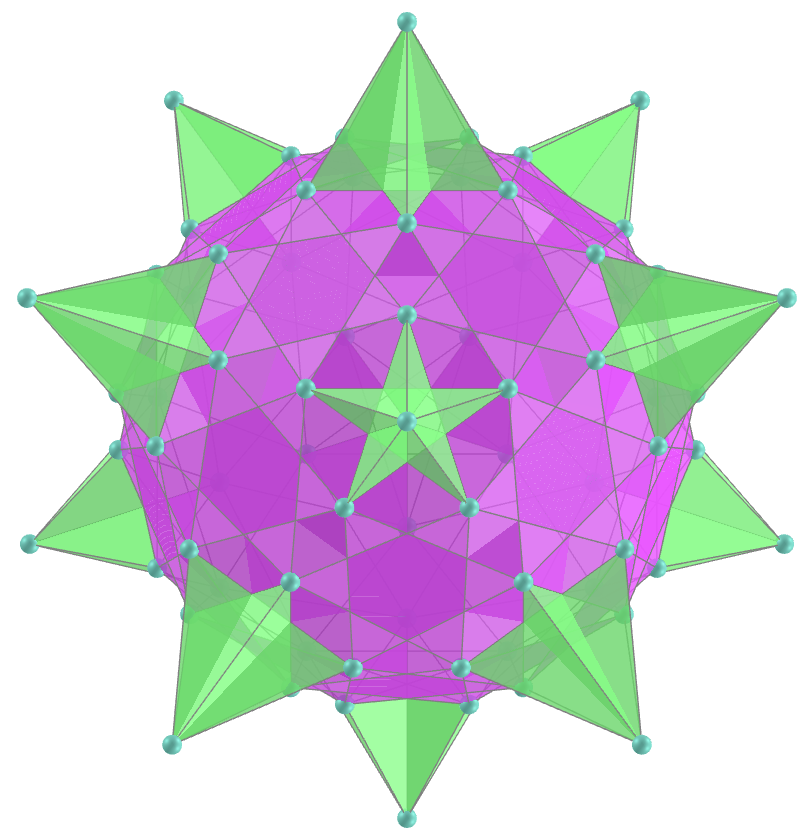
This deltahedron is constructed from a small snub icosicosidodecahedron core, to which pentagrammic pyramid-shaped “caps” (augmentations) are attached on its pentagrammic faces.
faces: 160 | edges: 240 | vertices: 82
18. Augmented great icosahedron
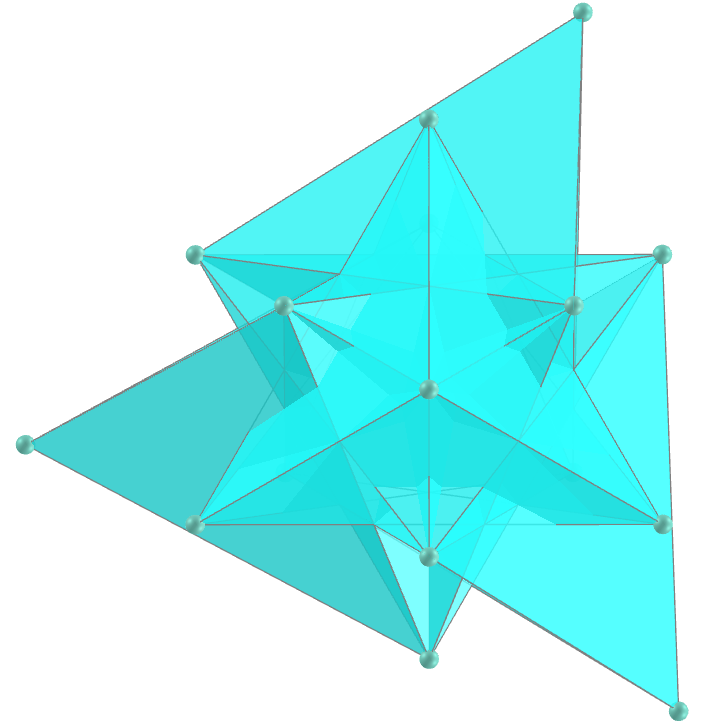
This deltahedron is constructed from a great icosahedron core, to which regular tetrahedron-shaped “caps” (augmentations) are attached on four faces.
faces: 28 | edges: 42 | vertices: 16
19. Excavated great stellated dodecahedron
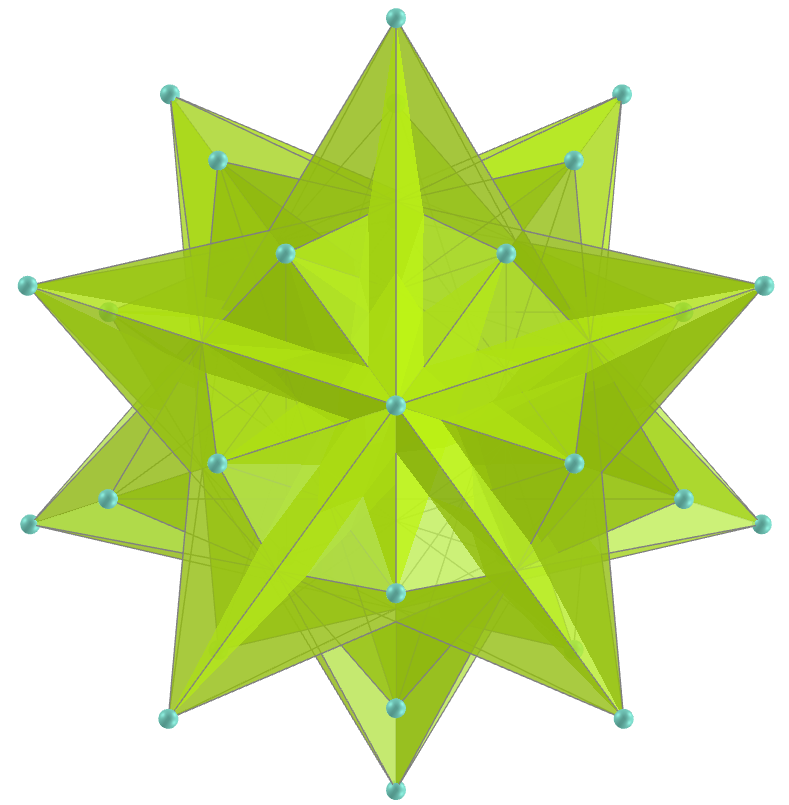
This deltahedron is constructed from a great stellated dodecahedron core, to which pentagrammic pyramids are excavated on its pentagrammic faces.
faces: 60 | edges: 90 | vertices: 32
20. Excavated great icosahedron
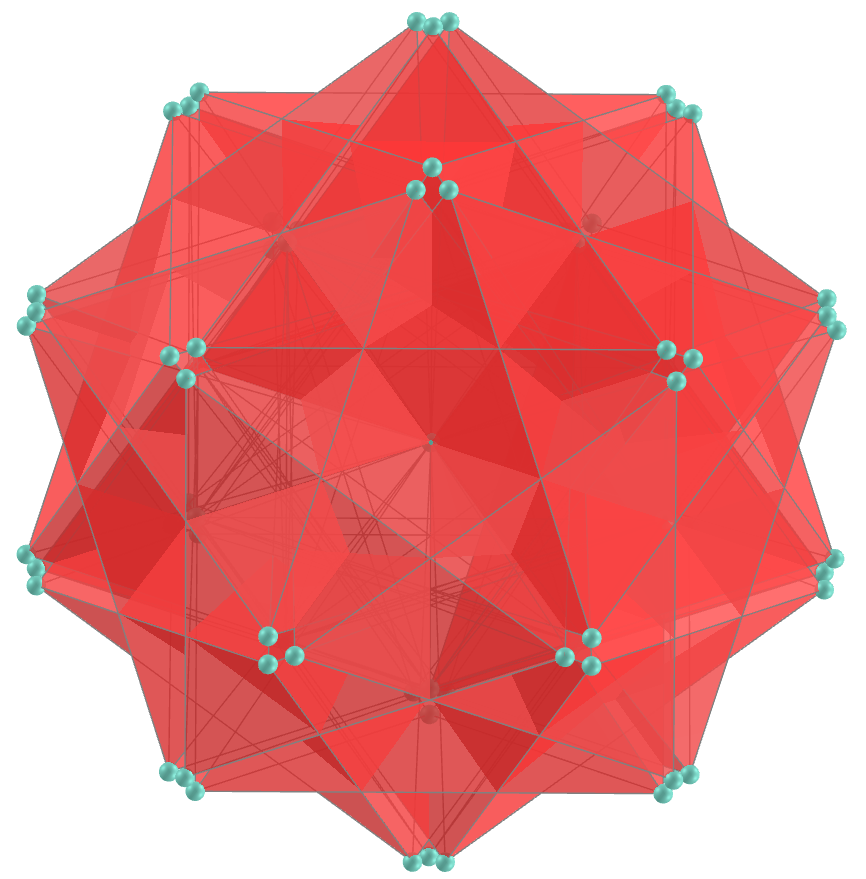
This deltahedron is constructed from a great icosahedron core, to which regular octahedra are excavated on its faces.
faces: 140 | edges: 210 | vertices: 72
21. Excavated great ditrigonal icosidodecahedron
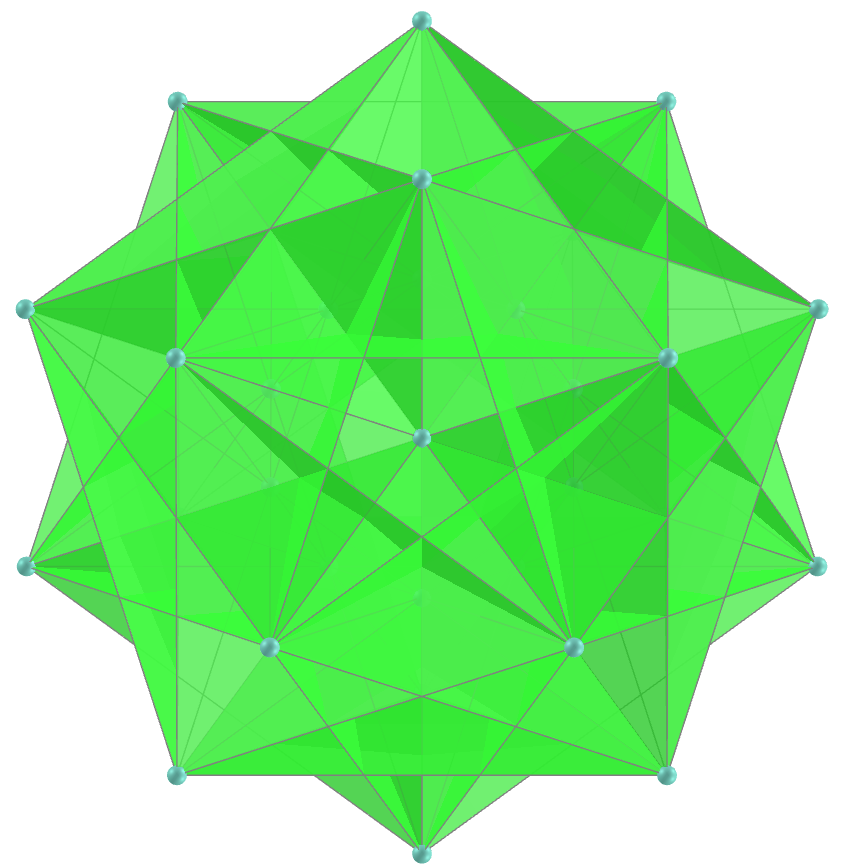
This deltahedron is constructed from a great ditrigonal icosidodecahedron core, to which pentagrammic pyramids are excavated on its pentagrammic faces.
faces: 80 | edges: 120 | vertices: 42
22. Augmented stellated truncated hexahedron
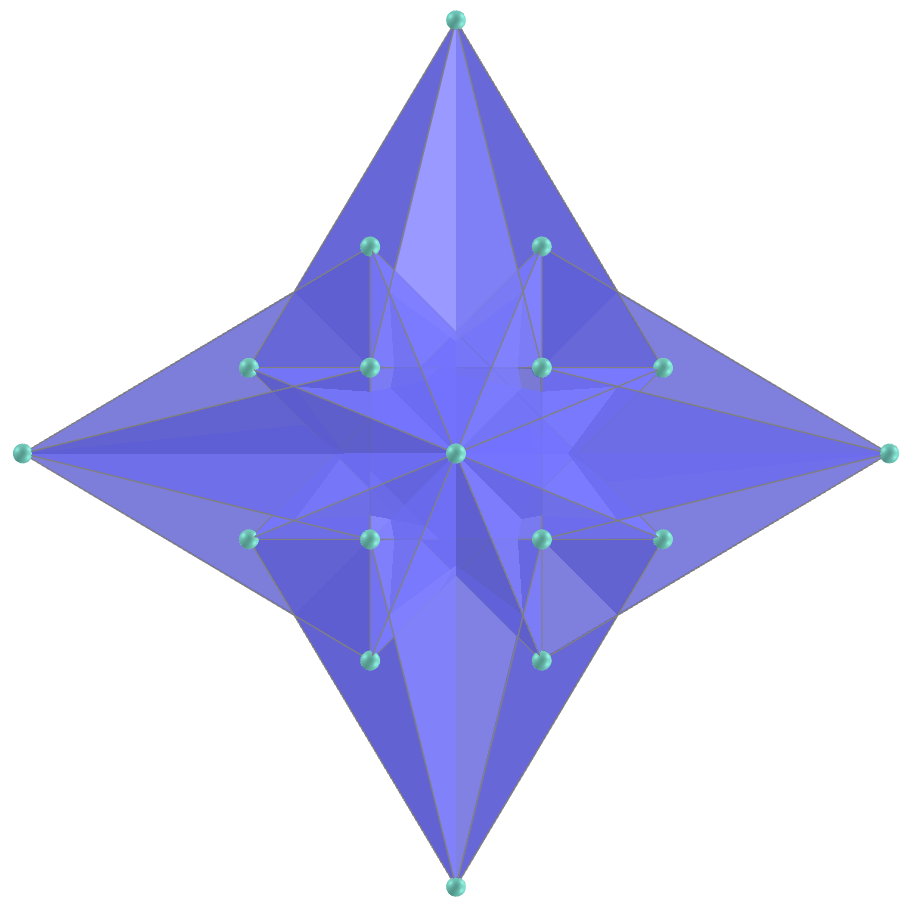
This deltahedron is constructed from a stellated truncated hexahedron core, to which octagrammic pyramid-shaped “caps” (augmentations) are attached on its octagrammic faces.
faces: 56 | edges: 84 | vertices: 30
23. Excavated stellated truncated hexahedron
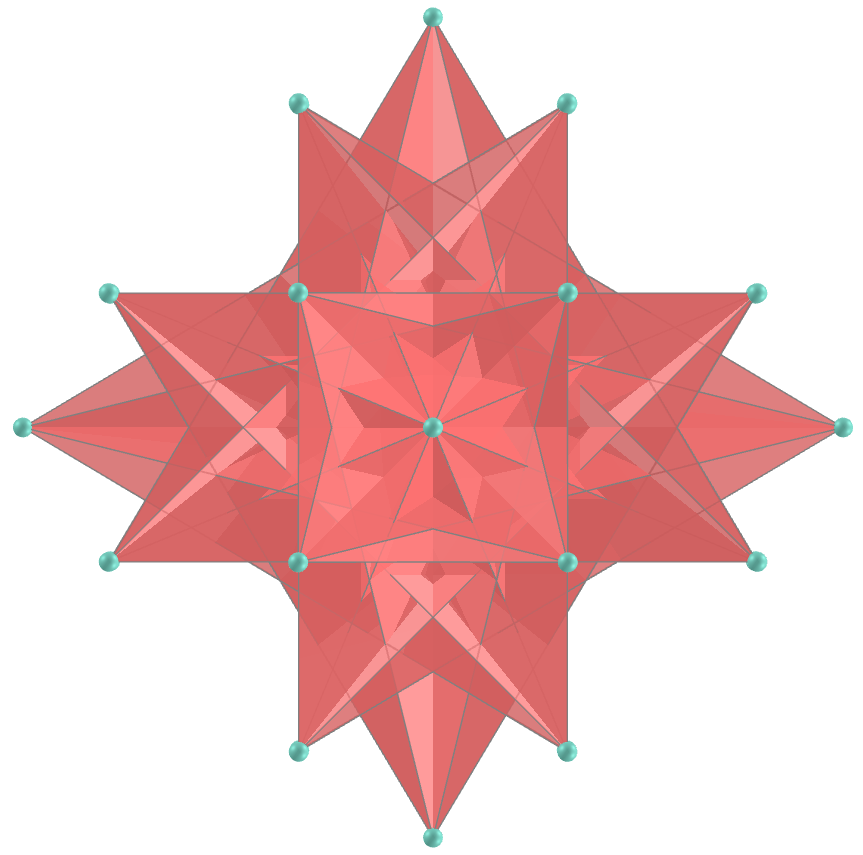
This deltahedron is constructed from a stellated truncated hexahedron core, to which octagrammic pyramids are excavated on its octagrammic faces.
faces: 56 | edges: 84 | vertices: 30
24. Augmented small ditrigonal icosidodecahedron
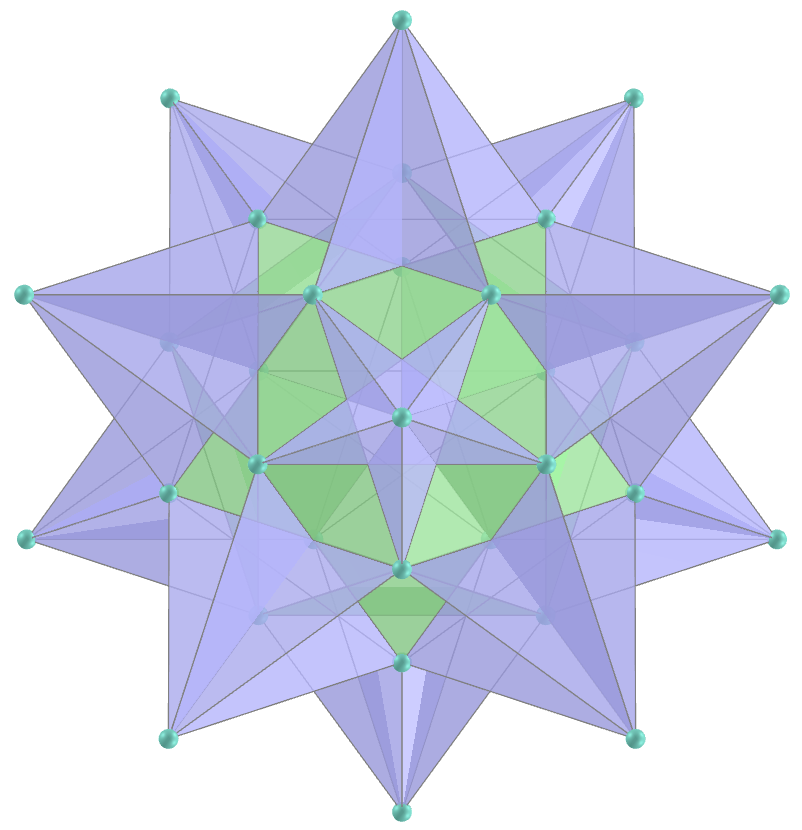
This deltahedron is constructed from a small ditrigonal icosidodecahedron core, to which pentagrammic pyramid-shaped “caps” (augmentations) are attached on its pentagrammic faces.
faces: 80 | edges: 120 | vertices: 42
25. Excavated small ditrigonal icosidodecahedron
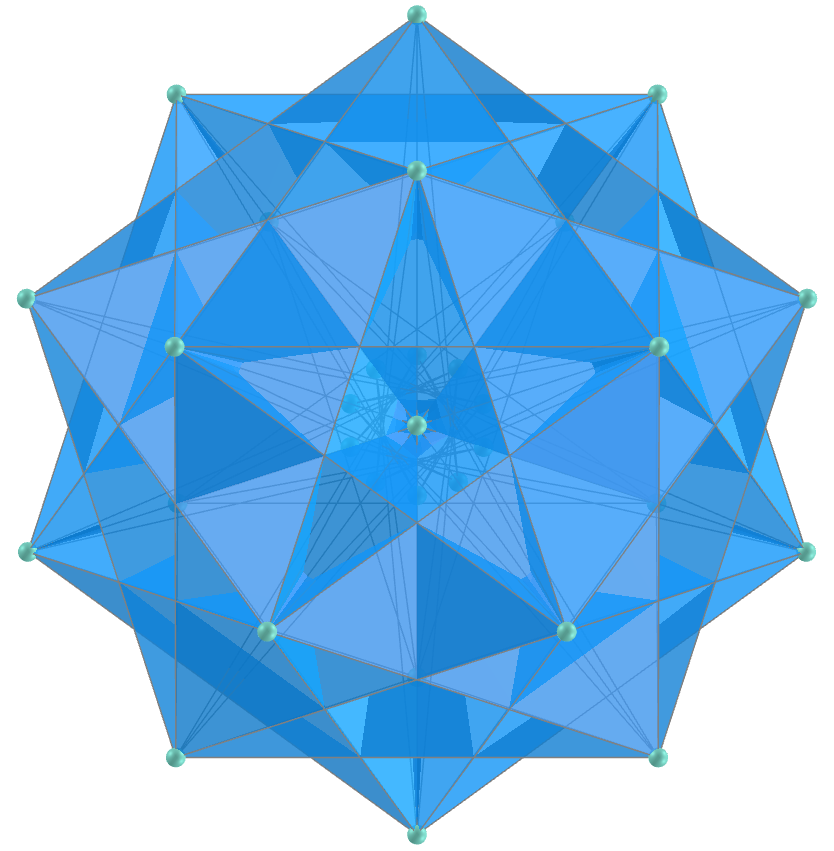
This deltahedron is constructed from a small ditrigonal icosidodecahedron core, to which pentagrammic pyramids are excavated on its pentagrammic faces.
faces: 80 | edges: 120 | vertices: 42
26. Diexcavated octahedron
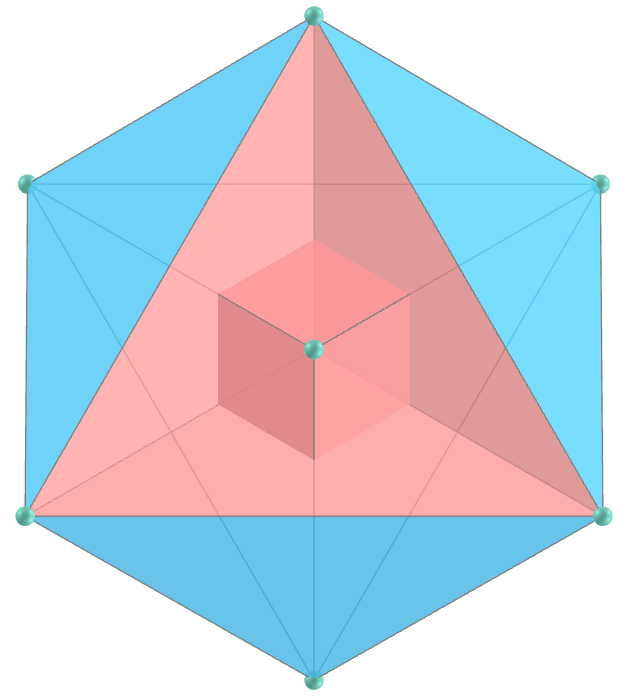
This deltahedron is constructed from an octahedron core, to which tetrahedra are excavated on two parallel faces.
faces: 12 | edges: 18 | vertices: 8
27. Diexcavated square antiprism
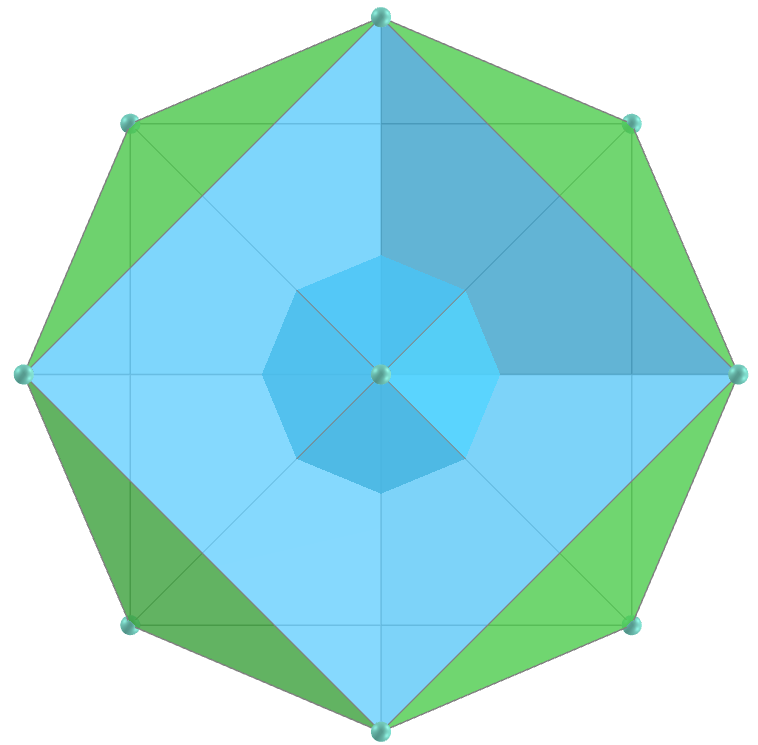
This deltahedron is constructed from a square antiprism core, to which square pyramids are excavated on its square faces.
faces: 16 | edges: 24 | vertices: 10
28. Diexcavated pentagonal antiprism
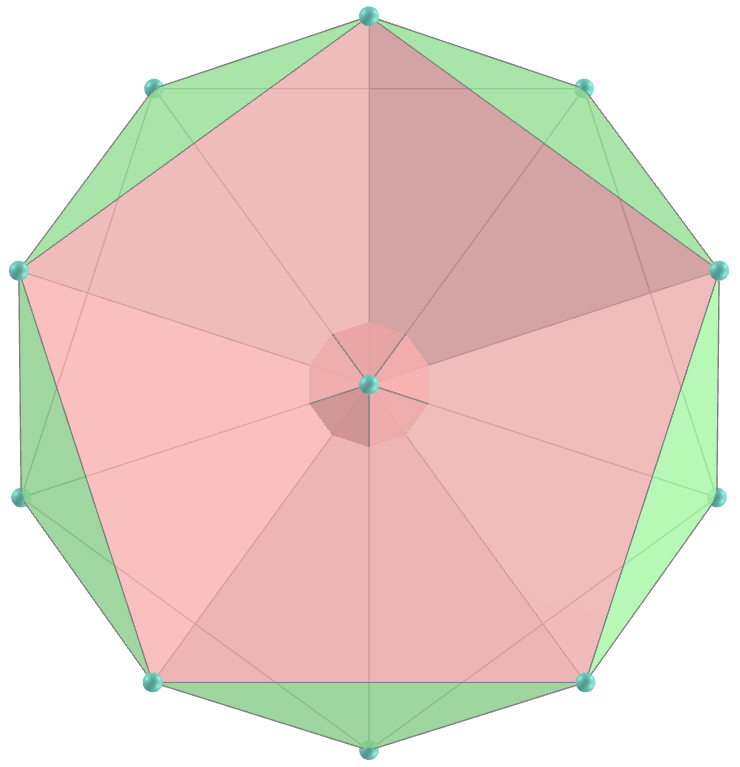
This deltahedron is constructed from a pentagonal antiprism core, to which pentagonal pyramids are excavated on its pentagonal faces.
faces: 20 | edges: 30 | vertices: 12
29. Tetrambiated icosahedron
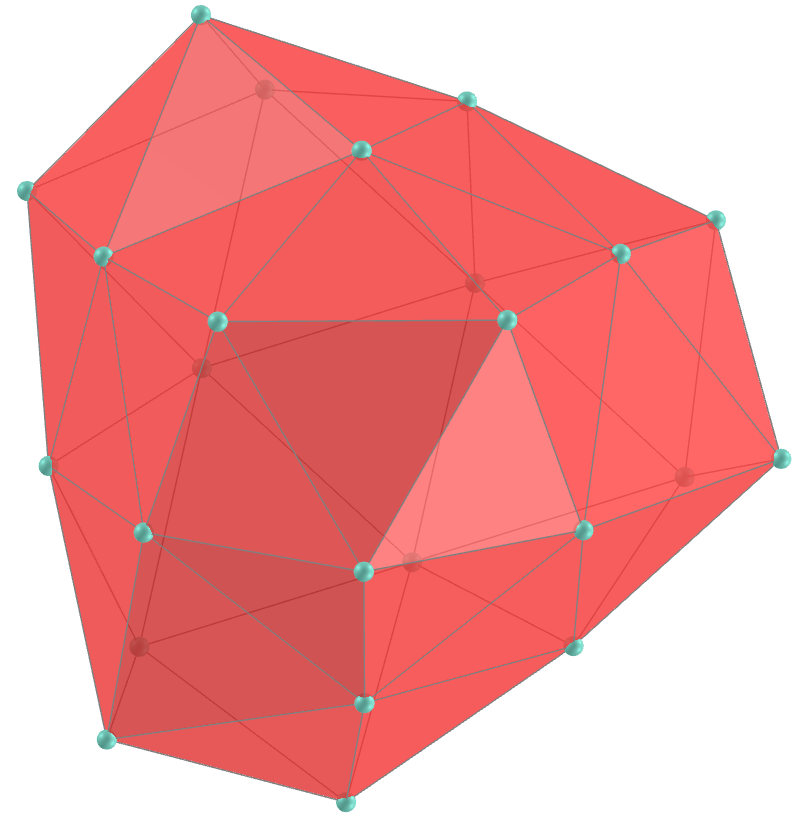
This polyhedron is formed by four sets of four triangles arranged tetrahedrally in the icosahedron, combined symmetrically with a set of ten equilateral triangles, generating a Cundy deltahedron with 44 faces.
faces: 44 | edges: 66 | vertices: 24
30. Hexaspheniated icosahedron
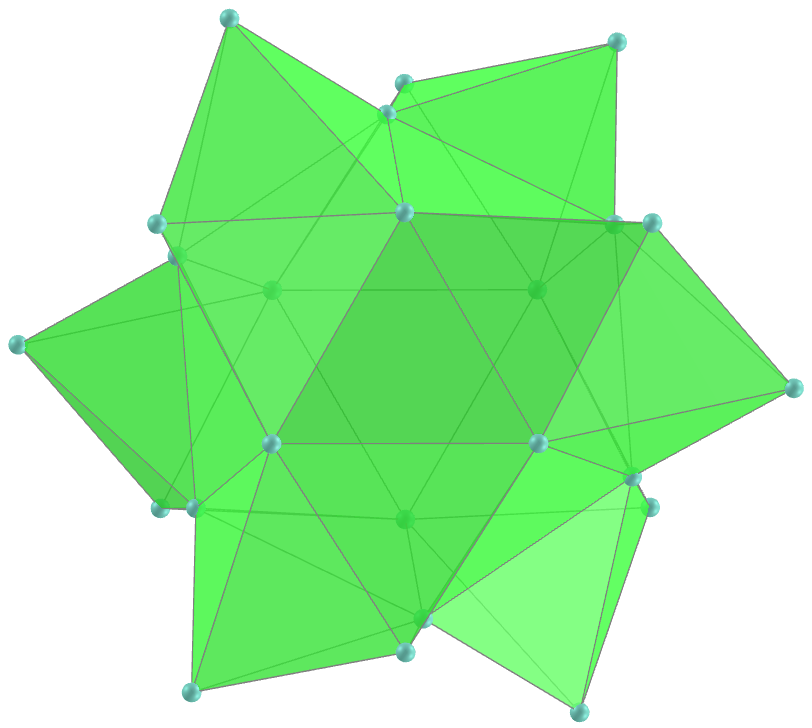
This polyhedron is formed by the combination of sphenoid structures (tetrahedral wedges), joined to a basic icosahedral structure.
faces: 44 | edges: 66 | vertices: 24
31. Augmented pentagrammic antiprism
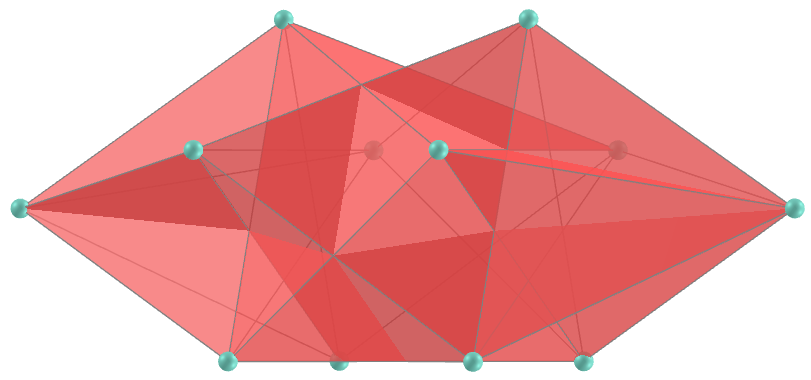
This deltahedron is constructed from a pentagrammic antiprism core, to which pentagrammic pyramid-shaped “caps” (augmentations) are attached on its pentagrammic faces.
faces: 20 | edges: 30 | vertices: 12
32. Excavated Pentagrammic antiprism
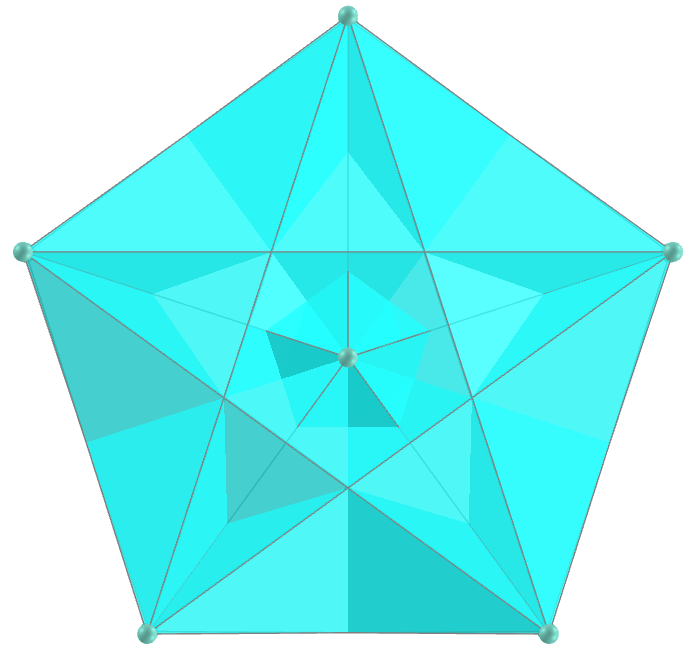
This deltahedron is constructed from a pentagrammic antiprism core, to which pentagrammic pyramids are excavated on its pentagrammic faces.
faces: 20 | edges: 30 | vertices: 12
33. Augmented Pentagrammic crossed antiprism
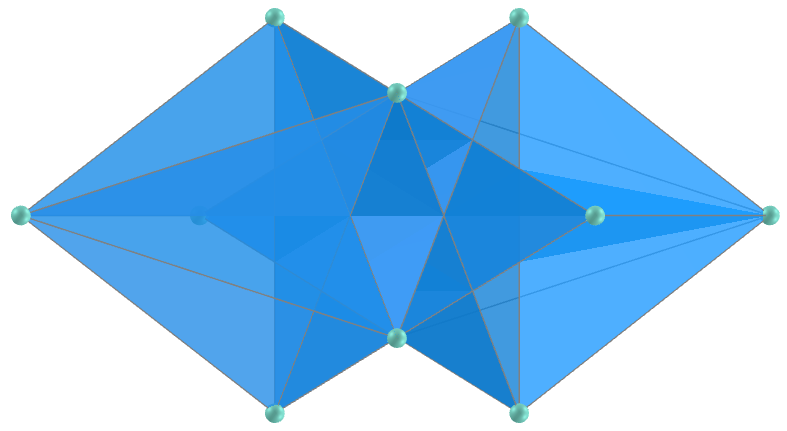
This deltahedron is constructed from a pentagrammic crossed antiprism core, to which pentagrammic pyramid-shaped “caps” (augmentations) are attached on its pentagrammic faces.
faces: 20 | edges: 30 | vertices: 12
34. Excavated Pentagrammic crossed antiprism
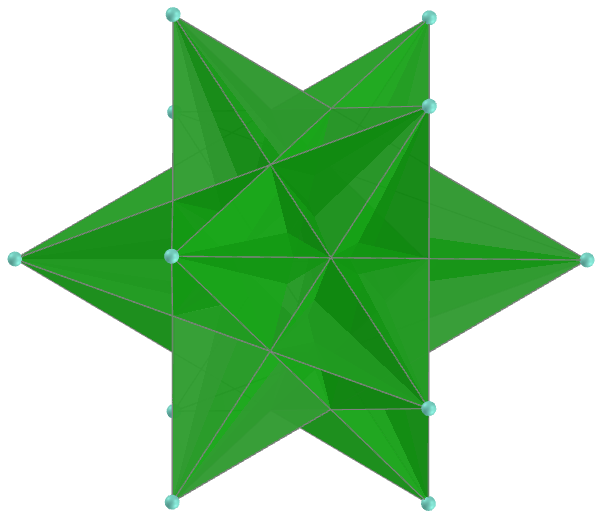
This deltahedron is constructed from a pentagrammic crossed antiprism core, to which pentagrammic pyramids are excavated on its pentagrammic faces.
faces: 20 | edges: 30 | vertices: 12
35. Augmented great icosidodecahedron
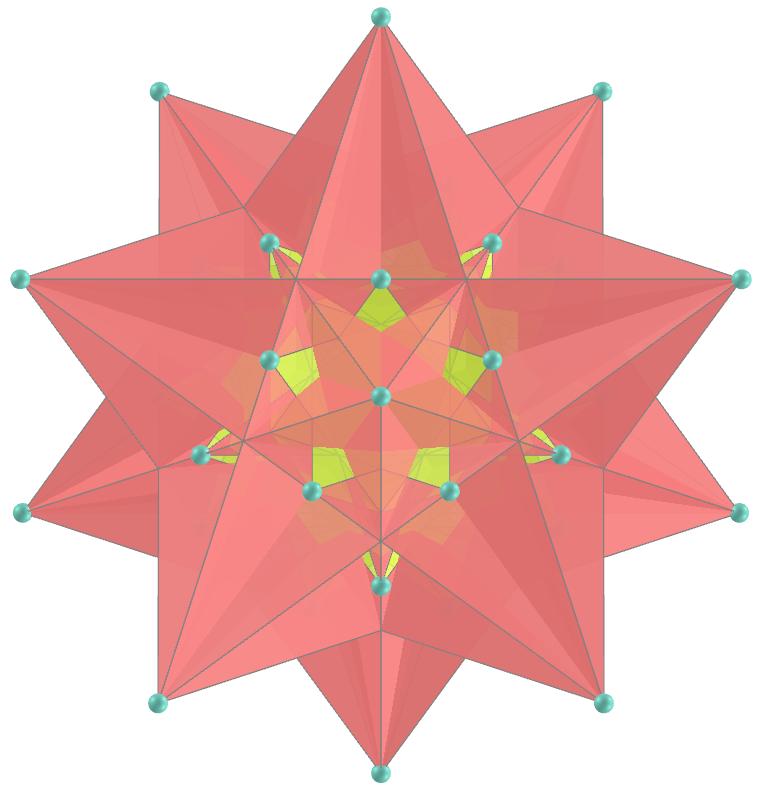
This deltahedron is constructed from a great icosidodecahedron core, to which pentagrammic pyramid-shaped “caps” (augmentations) are attached on its pentagrammic faces.
faces: 80 | edges: 120 | vertices: 42
36. Excavated great icosidodecahedron
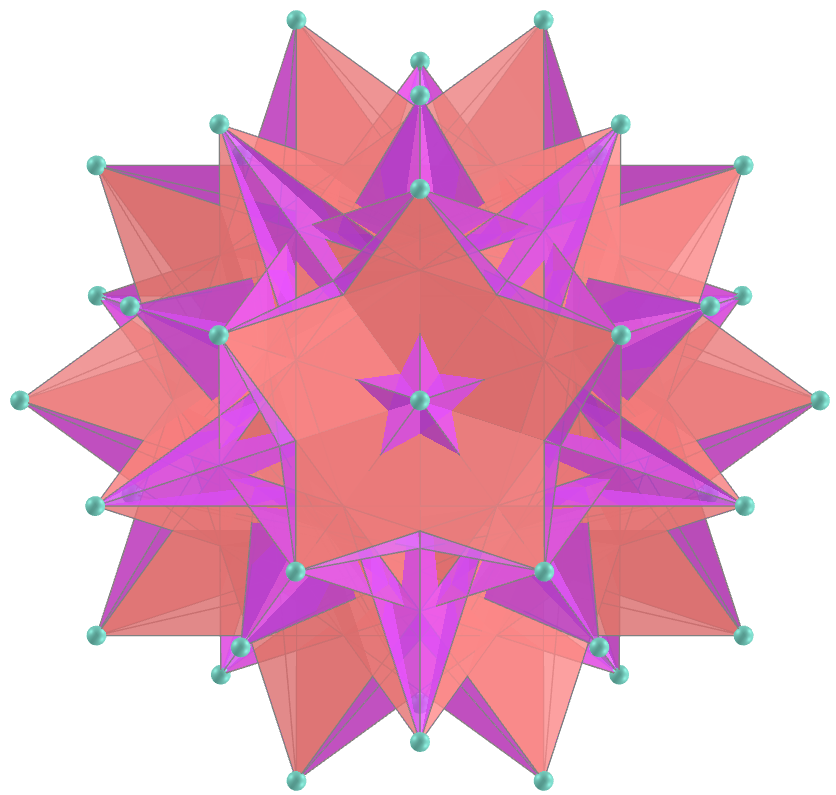
This deltahedron is constructed from a great icosidodecahedron core, to which pentagrammic pyramids are excavated on its pentagrammic faces.
faces: 80 | edges: 120 | vertices: 42
37. Excavated great stellated truncated dodecahedron
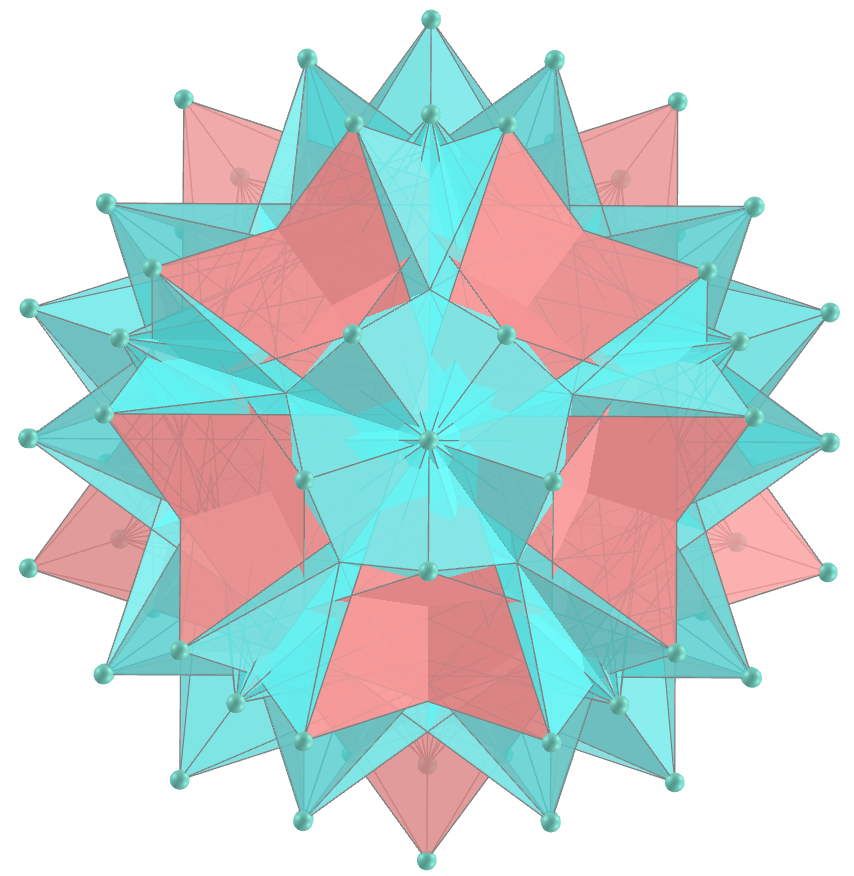
This deltahedron is constructed from a great stellated truncated dodecahedron core, to which pentagrammic pyramids are excavated on its pentagrammic faces.
faces: 140 | edges: 210 | vertices: 72
38. Augmented great stellated truncated dodecahedron
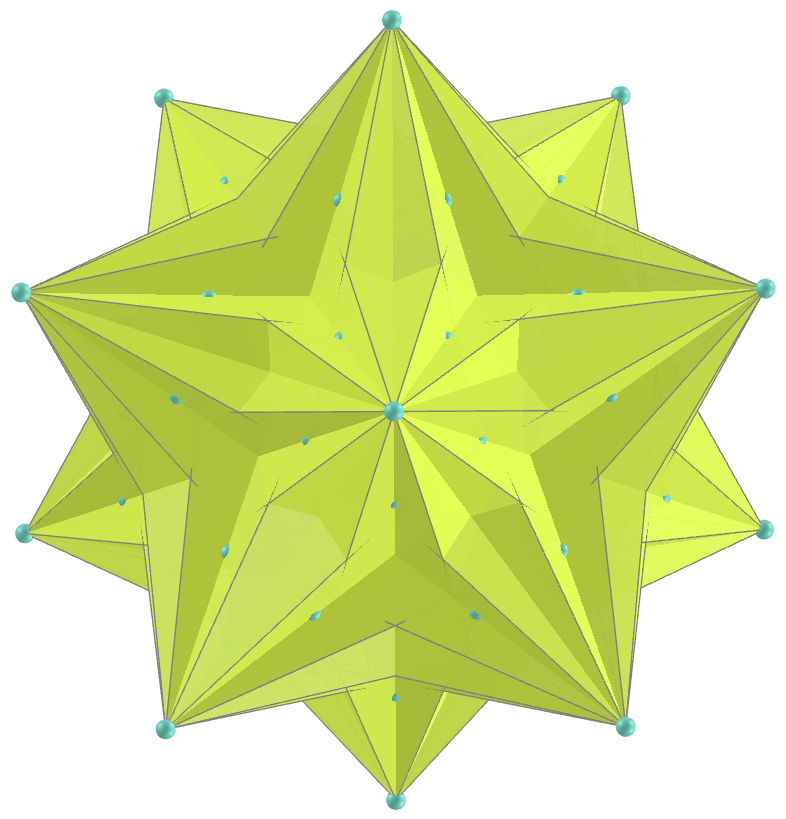
This deltahedron is constructed from a great stellated truncated dodecahedron core, to which pentagrammic pyramid-shaped “caps” (augmentations) are attached on its pentagrammic faces.
faces: 140 | edges: 210 | vertices: 72
39. Excavated great snub inverted icosidodecahedron
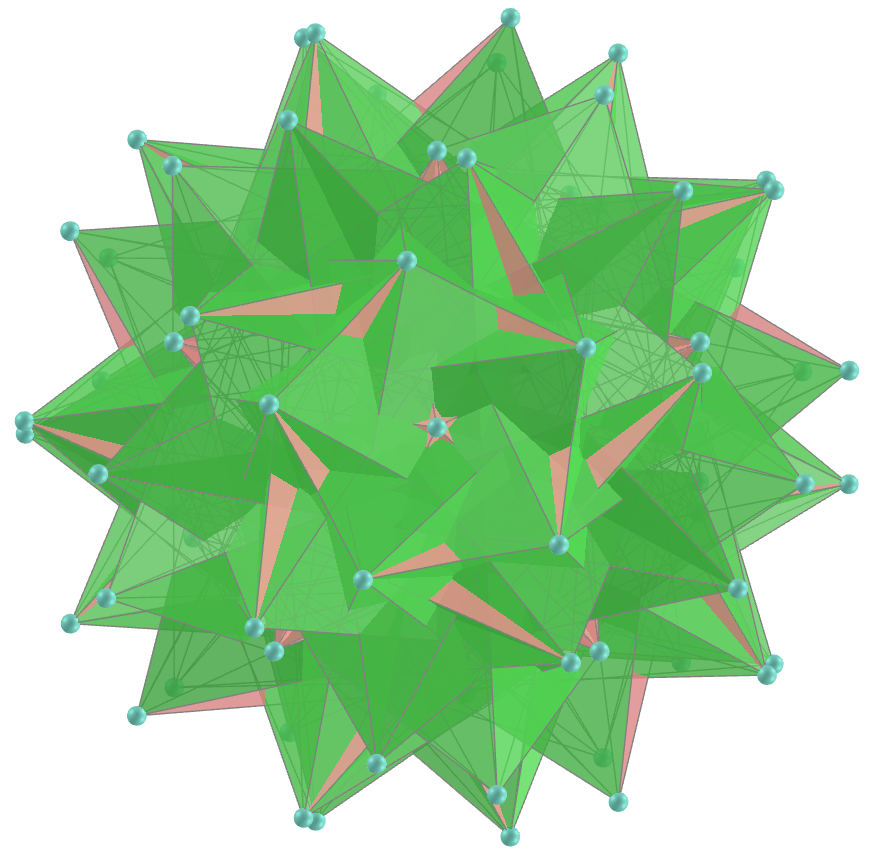
This deltahedron is constructed from a great snub inverted icosidodecahedron core, to which pentagrammic pyramids are excavated on its pentagrammic faces.
faces: 140 | edges: 210 | vertices: 72
40. Augmented great snub inverted icosidodecahedron
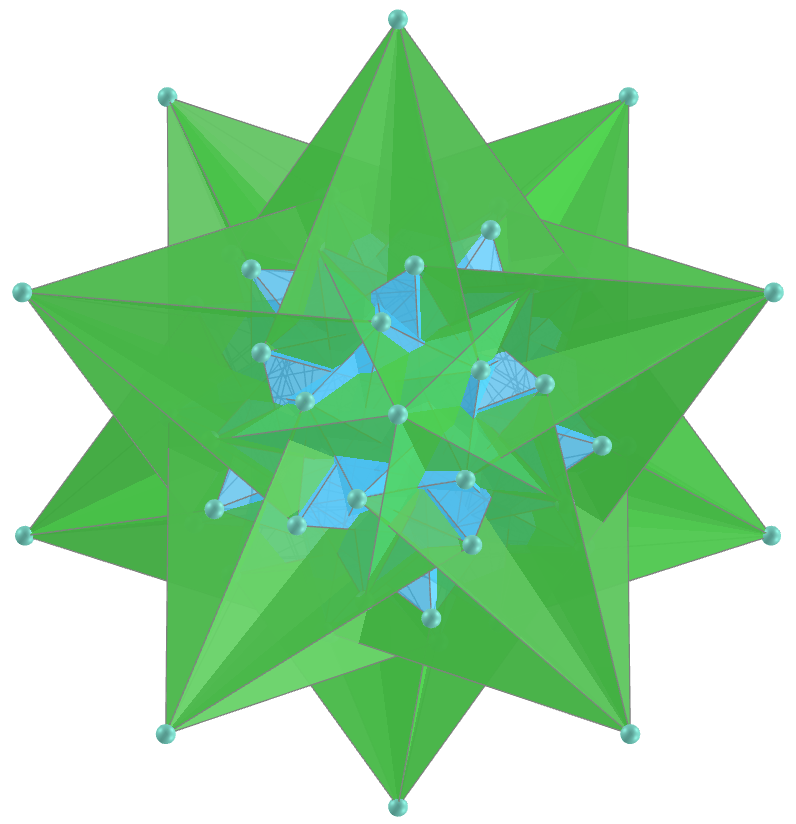
This deltahedron is constructed from a great snub inverted icosidodecahedron core, to which pentagrammic pyramid-shaped “caps” (augmentations) are attached on its pentagrammic faces.
faces: 140 | edges: 210 | vertices: 72
41. Augmented great snub icosidodecahedron
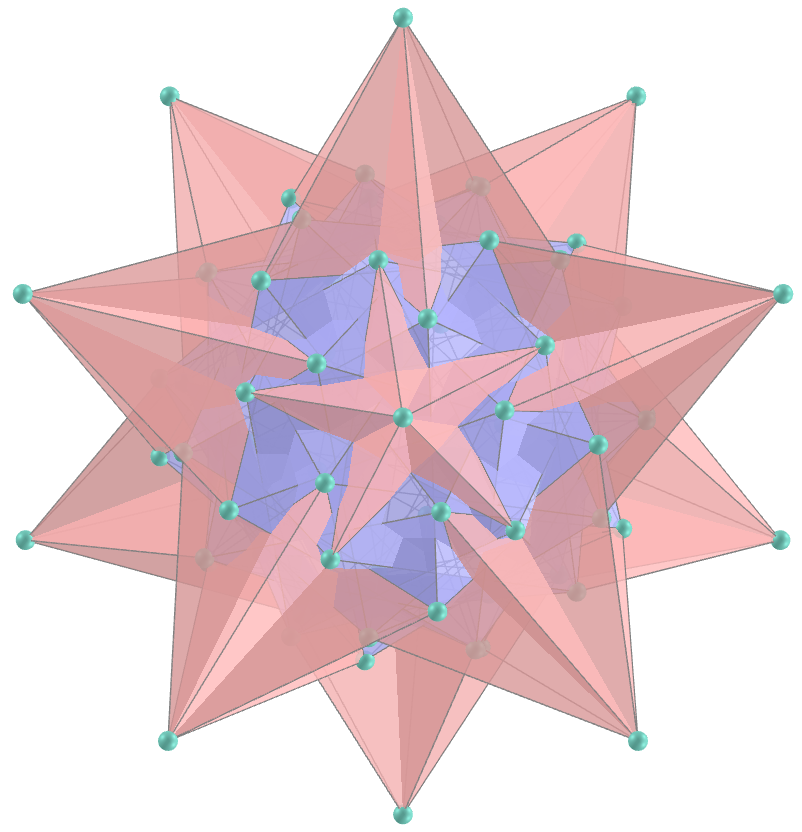
This deltahedron is constructed from a great snub icosidodecahedron core, to which pentagrammic pyramid-shaped “caps” (augmentations) are attached on its pentagrammic faces.
faces: 140 | edges: 210 | vertices: 72
42. Excavated great snub icosidodecahedron
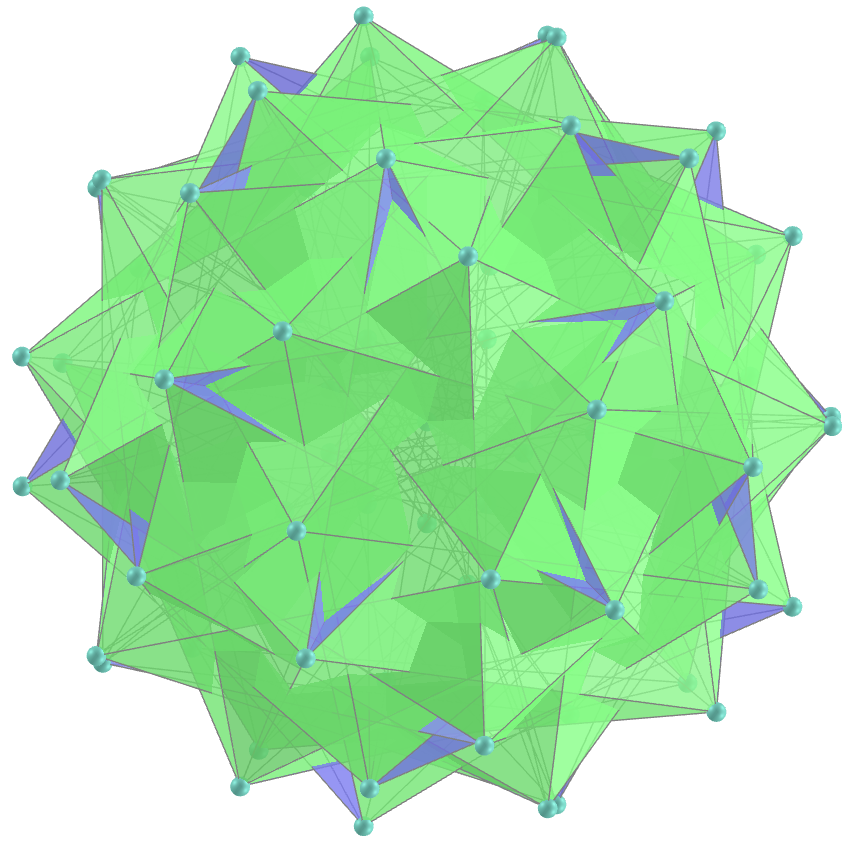
This deltahedron is constructed from a great snub icosidodecahedron core, to which pentagrammic pyramids are excavated on its pentagrammic faces.
faces: 140 | edges: 210 | vertices: 72
43. Excavated great retrosnub icosidodecahedron
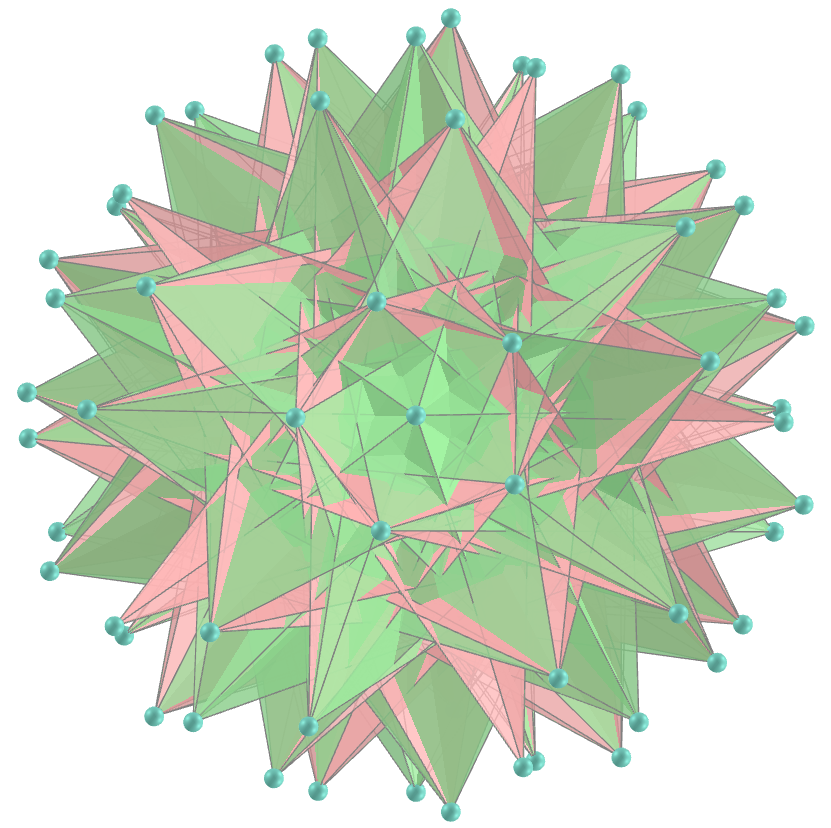
This deltahedron is constructed from a great retrosnub icosidodecahedron core, to which pentagrammic pyramids are excavated on its pentagrammic faces.
faces: 140 | edges: 210 | vertices: 72
44. Augmented great retrosnub icosidodecahedron
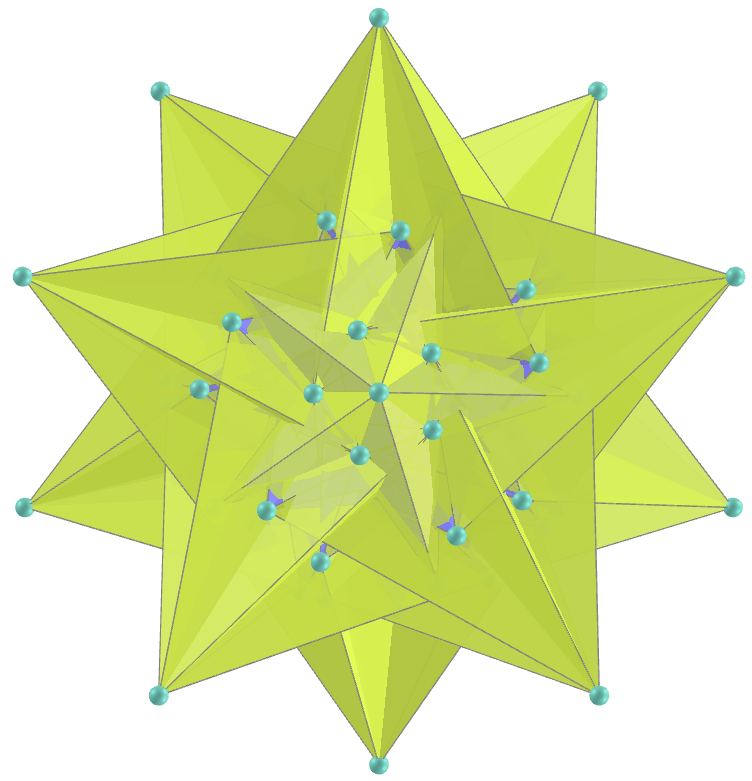
This deltahedron is constructed from a great retrosnub icosidodecahedron core, to which pentagrammic pyramid-shaped “caps” (augmentations) are attached on its pentagrammic faces.
faces: 140 | edges: 210 | vertices: 72
45. Augmented small retrosnub icosicosidodecahedron
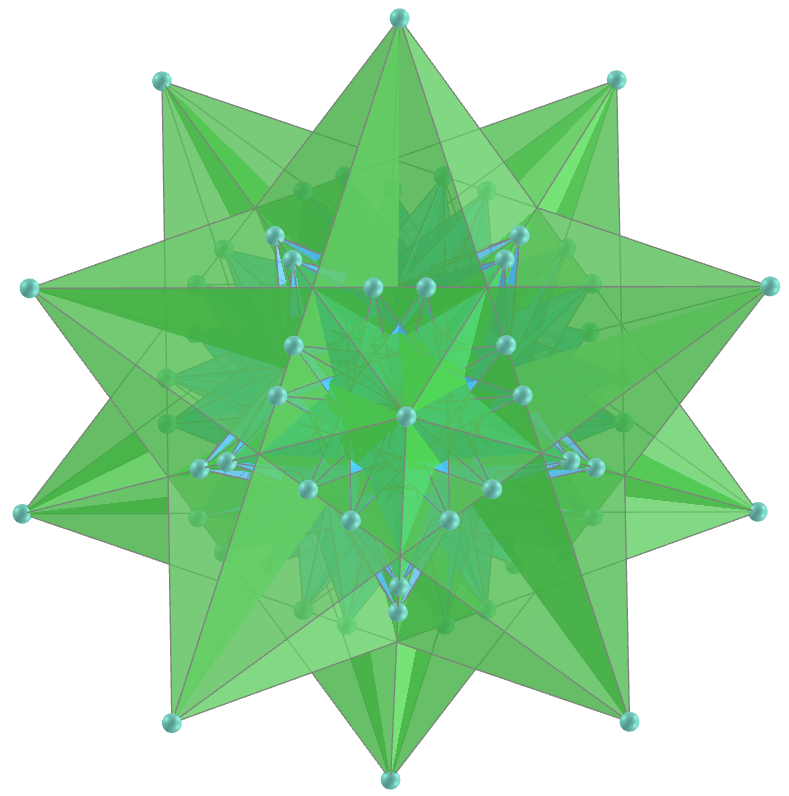
This deltahedron is constructed from a small retrosnub icosicosidodecahedron core, to which pentagrammic pyramid-shaped “caps” (augmentations) are attached on its pentagrammic faces.
faces: 160 | edges: 240 | vertices: 82
46. Excavated small retrosnub icosicosidodecahedron
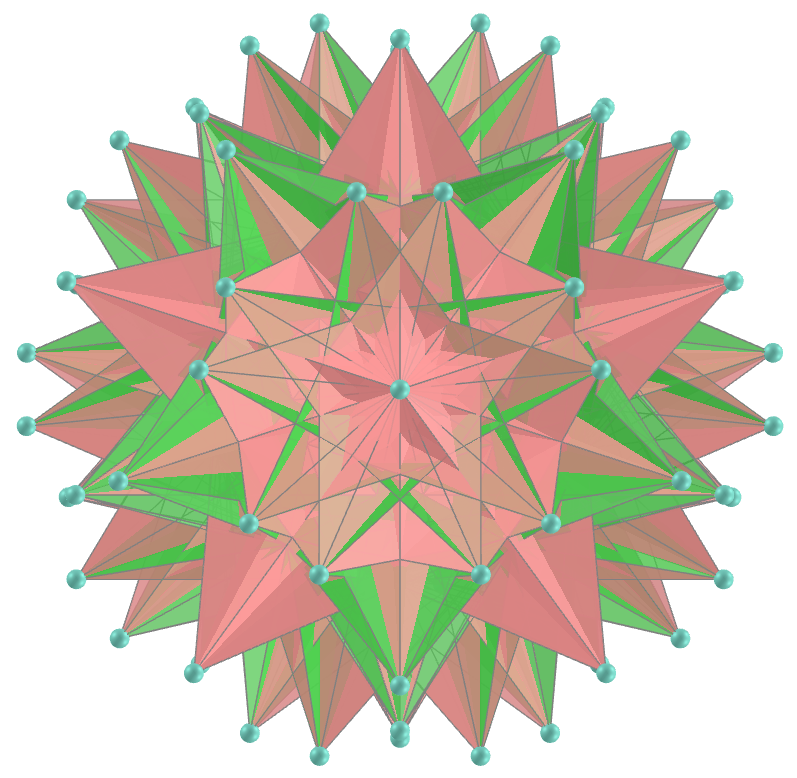
This deltahedron is constructed from a small retrosnub icosicosidodecahedron core, to which pentagrammic pyramids are excavated on its pentagrammic faces.
faces: 160 | edges: 240 | vertices: 82
47. Excavated great snub dodecicosidodecahedron
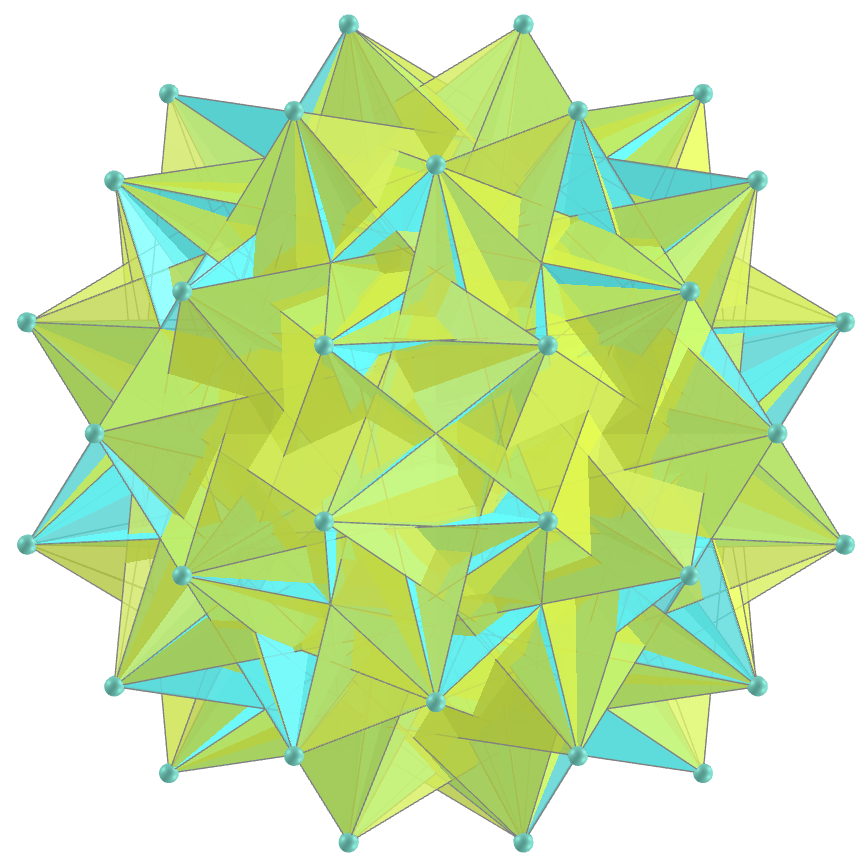
This deltahedron is constructed from a great snub dodecicosidodecahedron core, to which pentagrammic pyramids are excavated on its pentagrammic faces.
faces: 200 | edges: 300 | vertices: 72
48. Augmented great snub dodecicosidodecahedron
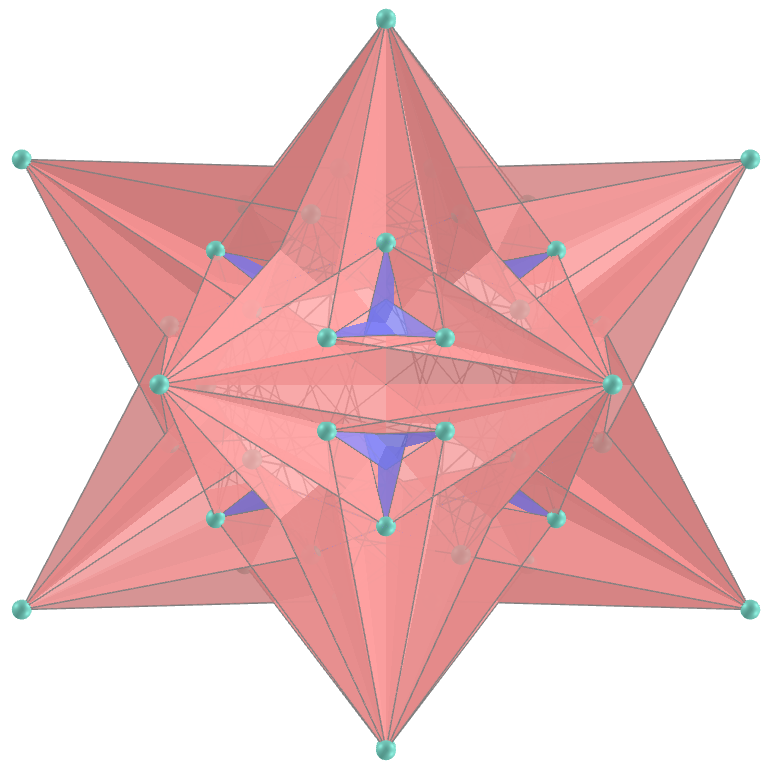
This deltahedron is constructed from a great snub dodecicosidodecahedron core, to which pentagrammic pyramid-shaped “caps” (augmentations) are attached on its pentagrammic faces.
faces: 200 | edges: 300 | vertices: 72
49. Augmented snub dodecadodecahedron
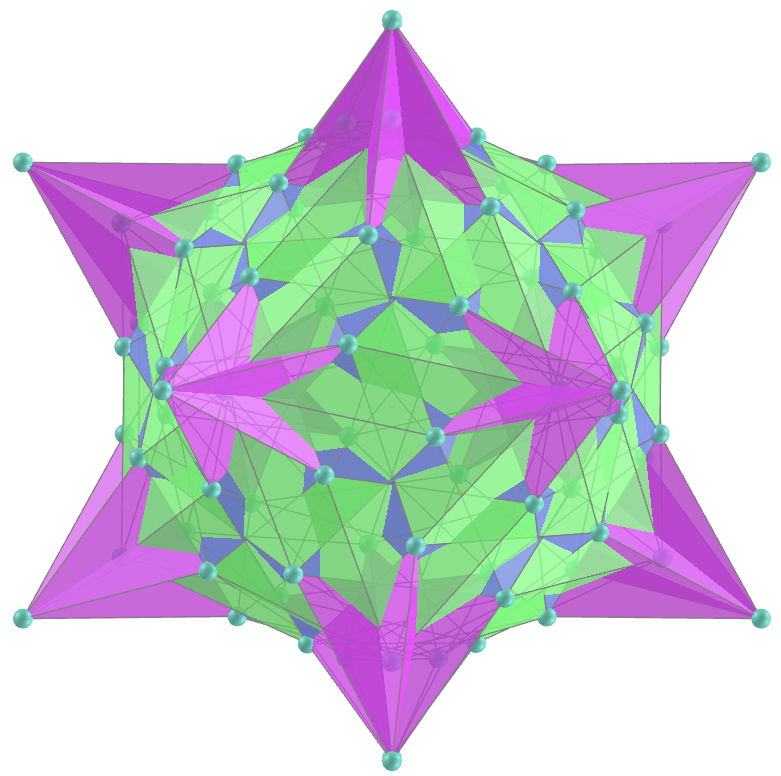
This deltahedron is constructed from a snub dodecadodecahedron core, to which pentagrammic and pentagonal pyramid-shaped “caps” (augmentations) are attached on its pentagrammic and pentagonal faces.
faces: 180 | edges: 270 | vertices: 84
50. Excavated snub dodecadodecahedron
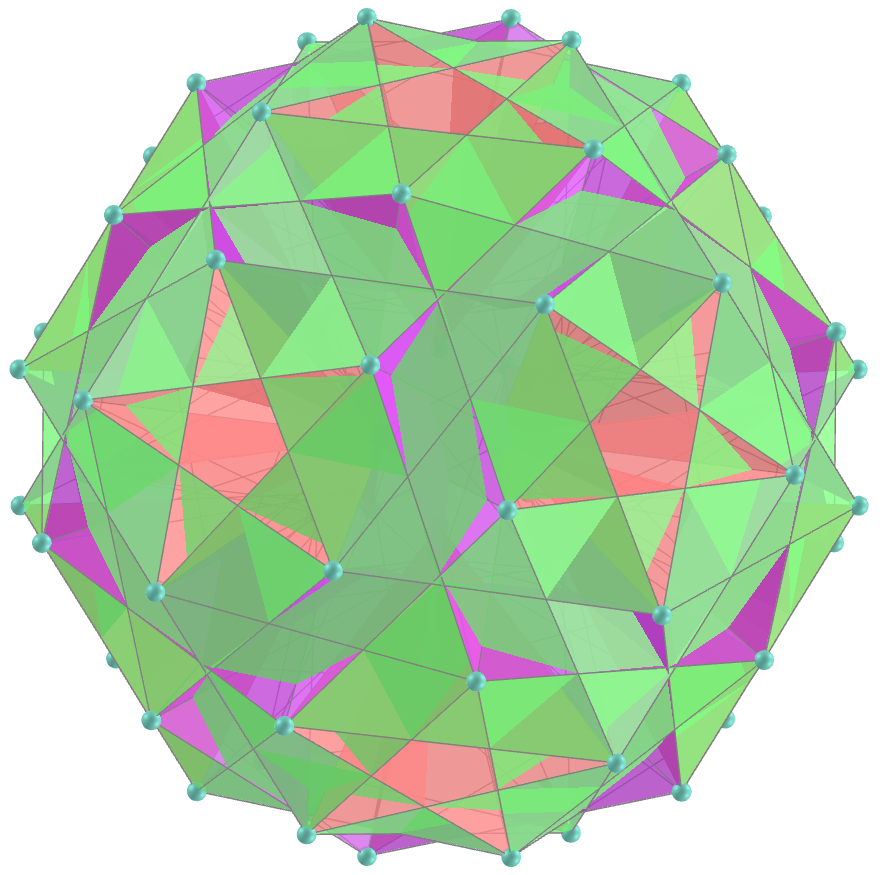
This deltahedron is constructed from a snub dodecadodecahedron core, to which pentagrammic and pentagonal pyramids are excavated on its pentagrammic and pentagonal faces.
faces: 180 | edges: 270 | vertices: 84
51. Excavated and augmented snub dodecadodecahedron
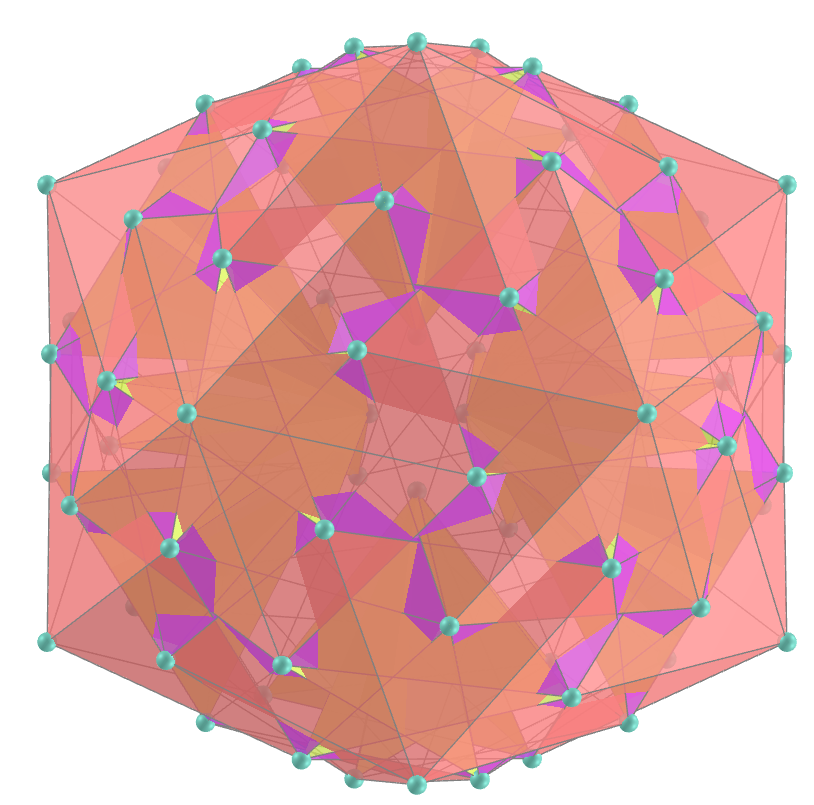
This deltahedron is constructed from a snub dodecadodecahedron core, to which pentagrammic pyramids are excavated on its pentagrammic faces, and pentagonal pyramid-shaped “caps” (augmentations) are attached on its pentagonal faces.
faces: 180 | edges: 270 | vertices: 84
52. Augmented inverted snub dodecadodecahedron
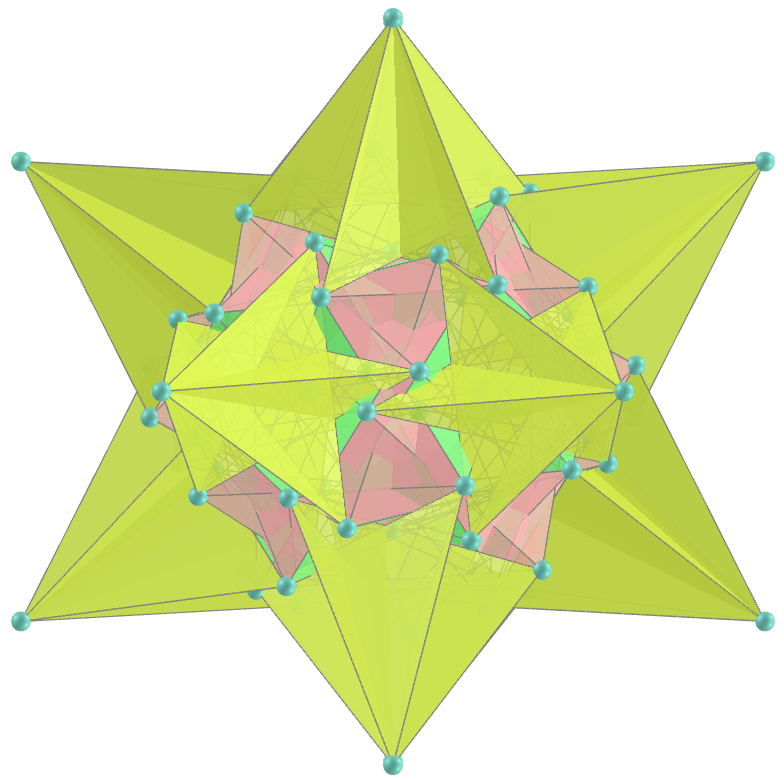
This deltahedron is constructed from a inverted snub dodecadodecahedron core, to which pentagrammic and pentagonal pyramid-shaped “caps” (augmentations) are attached on its pentagrammic and pentagonal faces.
faces: 180 | edges: 270 | vertices: 84
53. Excavated inverted snub dodecadodecahedron
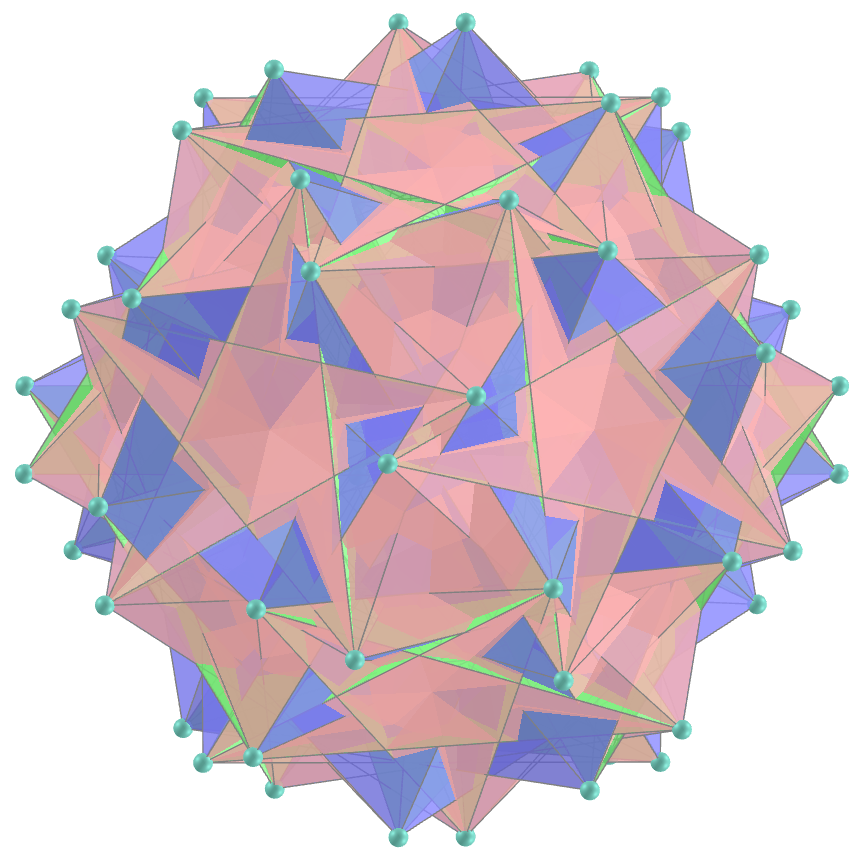
This deltahedron is constructed from a inverted snub dodecadodecahedron core, to which pentagrammic and pentagonal pyramids are excavated on its pentagrammic and pentagonal faces.
faces: 180 | edges: 270 | vertices: 84
54. Excavated and augmented inverted snub dodecadodecahedron
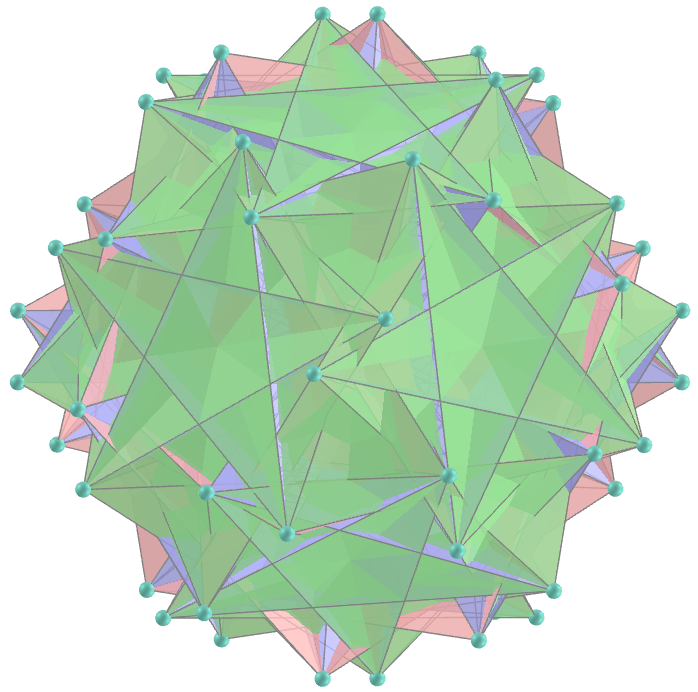
This deltahedron is constructed from a inverted snub dodecadodecahedron core, to which pentagrammic pyramids are excavated on its pentagrammic faces, and pentagonal pyramid-shaped “caps” (augmentations) are attached on its pentagonal faces.
faces: 180 | edges: 270 | vertices: 84
55. Augmented snub icosidodecadodecahedron
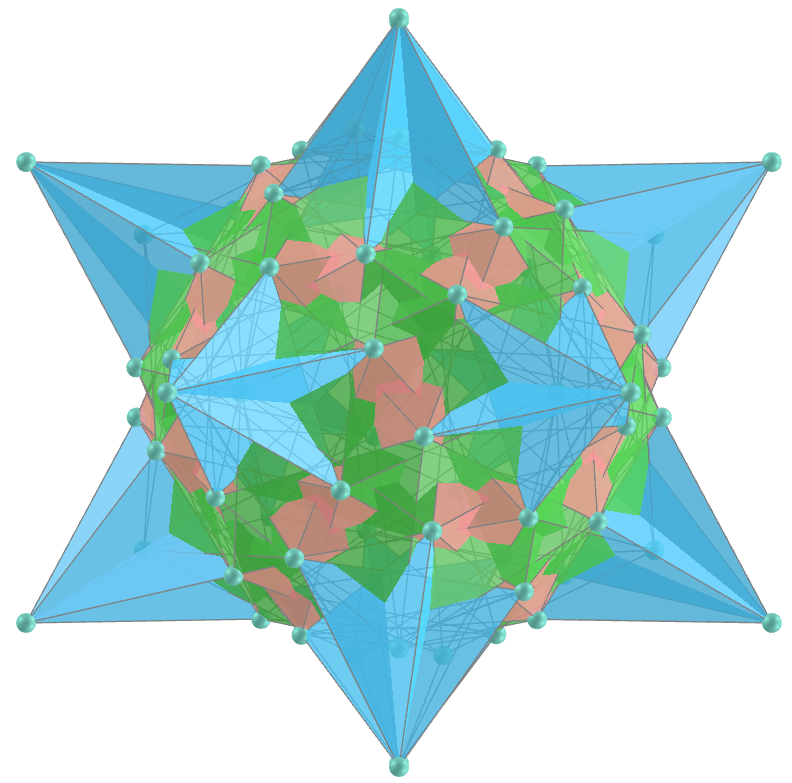
This deltahedron is constructed from a snub icosidodecadodecahedron core, to which pentagrammic and pentagonal pyramid-shaped “caps” (augmentations) are attached on its pentagrammic and pentagonal faces.
faces: 180 | edges: 270 | vertices: 84
56. Excavated snub icosidodecadodecahedron
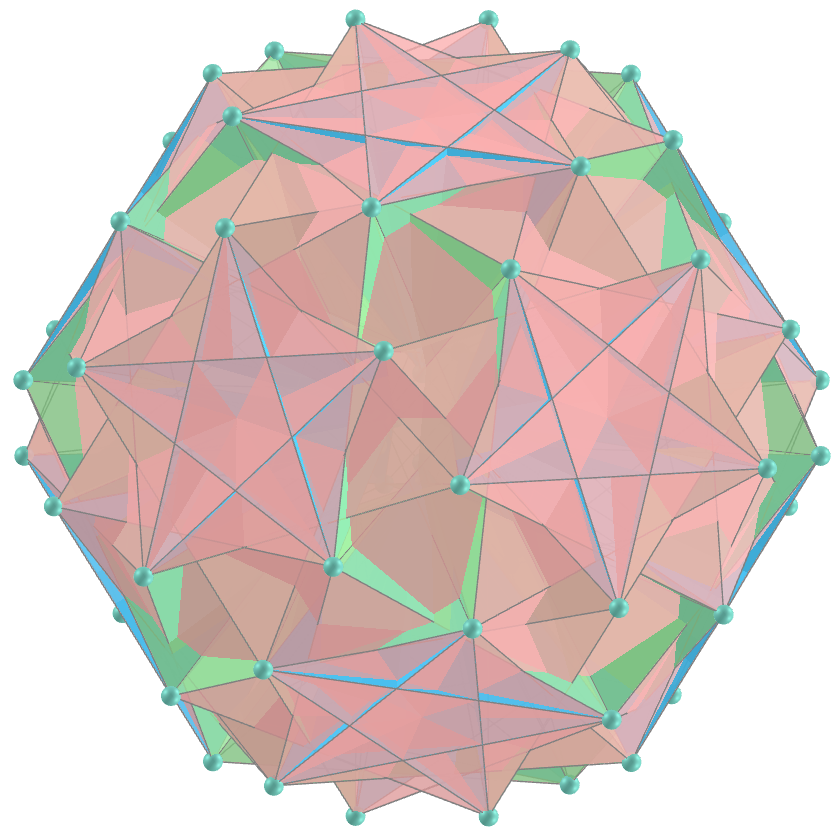
This deltahedron is constructed from a great snub icosidodecadodecahedron core, to which pentagrammic and pentagonal pyramids are excavated on its pentagrammic and pentagonal faces.
faces: 180 | edges: 270 | vertices: 84
57. Excavated and augmented snub icosidodecadodecahedron
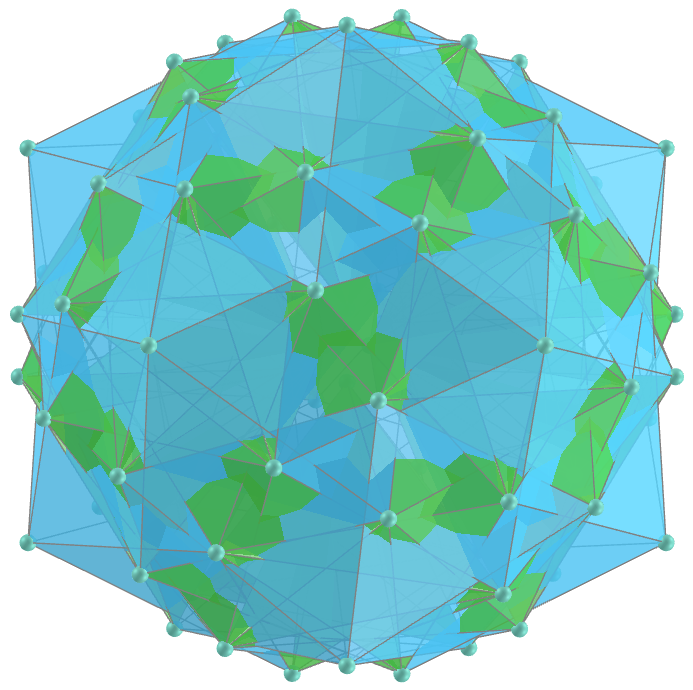
This deltahedron is constructed from a great snub icosidodecadodecahedron core, to which pentagrammic pyramids are excavated on its pentagrammic faces, and pentagonal pyramid-shaped “caps” (augmentations) are attached on its pentagonal faces.
faces: 180 | edges: 270 | vertices: 84
58. Möbius deltahedron
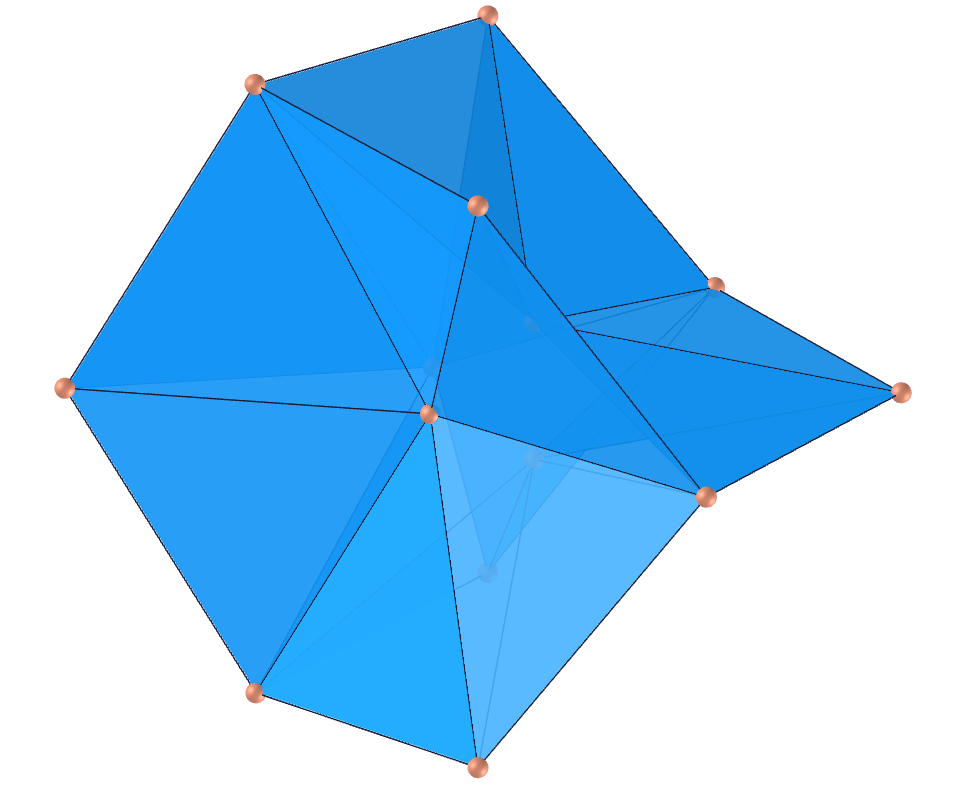
Möbius deltahedra are simply isomers of the Möbius triangle versions of the tetrahedron, cube and dodecahedron.
faces: 24 | edges: 36 | vertices: 14
59. Möbius octakis hexahedron
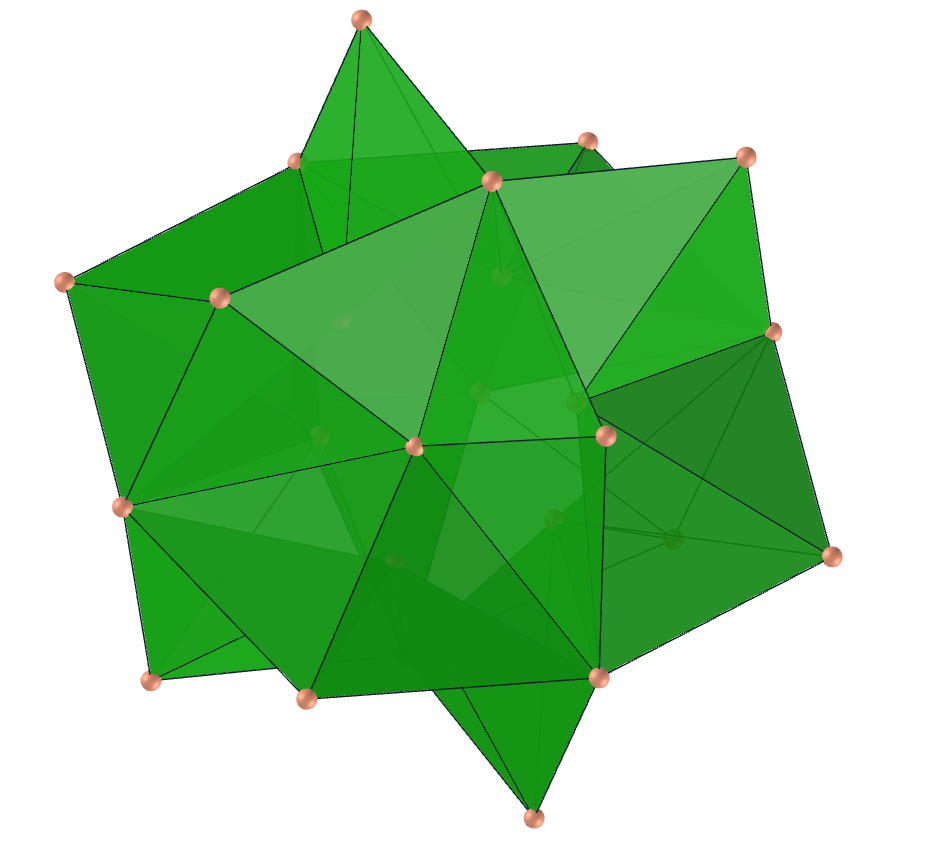
The octakis hexahedron is a 48-faced Möbius deltahedron derived from the cube and the medial rhombic triacontahedron.
faces: 48 | edges: 72 | vertices: 26
60. Möbius hexakis octahedron
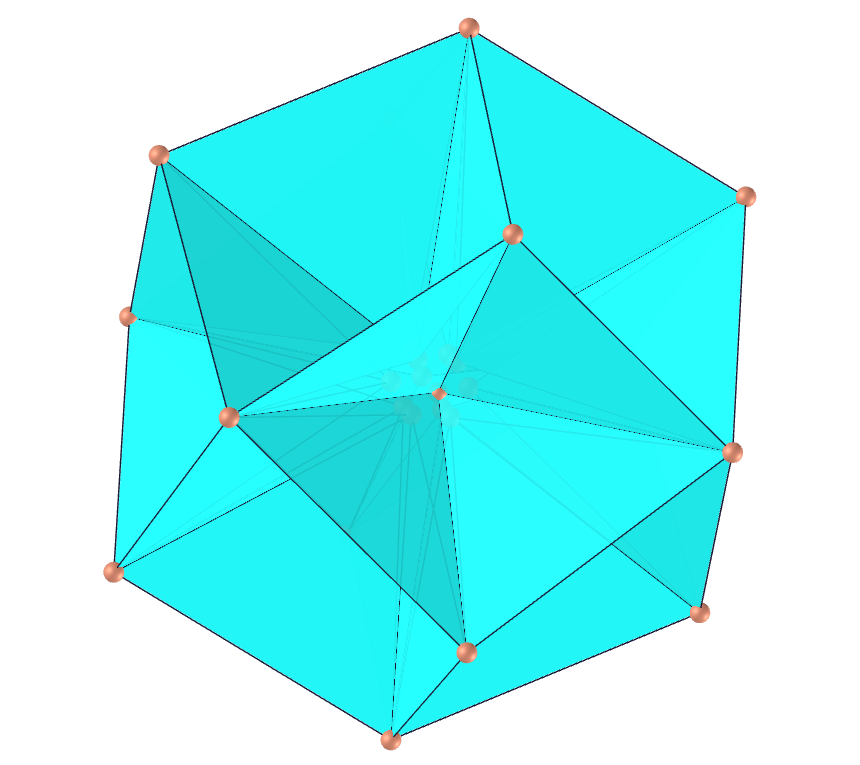
The hexakis octahedron is a 48-faced Möbius deltahedron derived from the cube and the medial rhombic triacontahedron.
faces: 48 | edges: 72 | vertices: 26
61. Möbius hexakis icosahedron
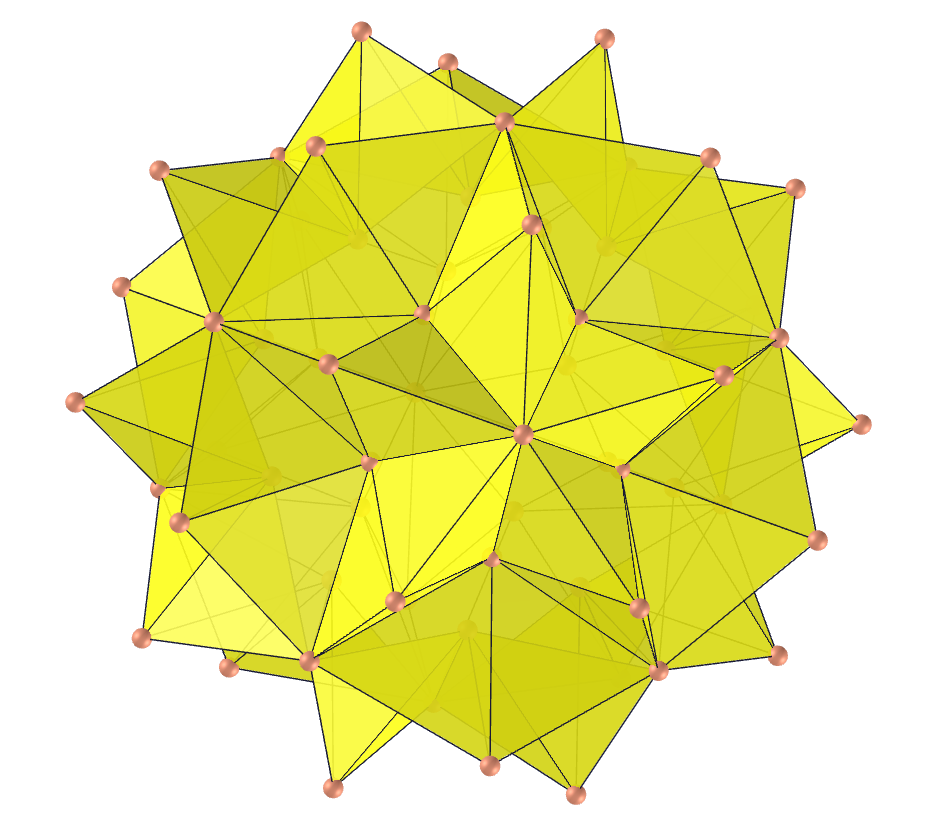
The hexakis icosahedron is a 120-faced Möbius deltahedron derived from the icosahedron and the great rhombic triacontahedron.
faces: 120 | edges: 180 | vertices: 62
62. Möbius 10-akis dodecahedron
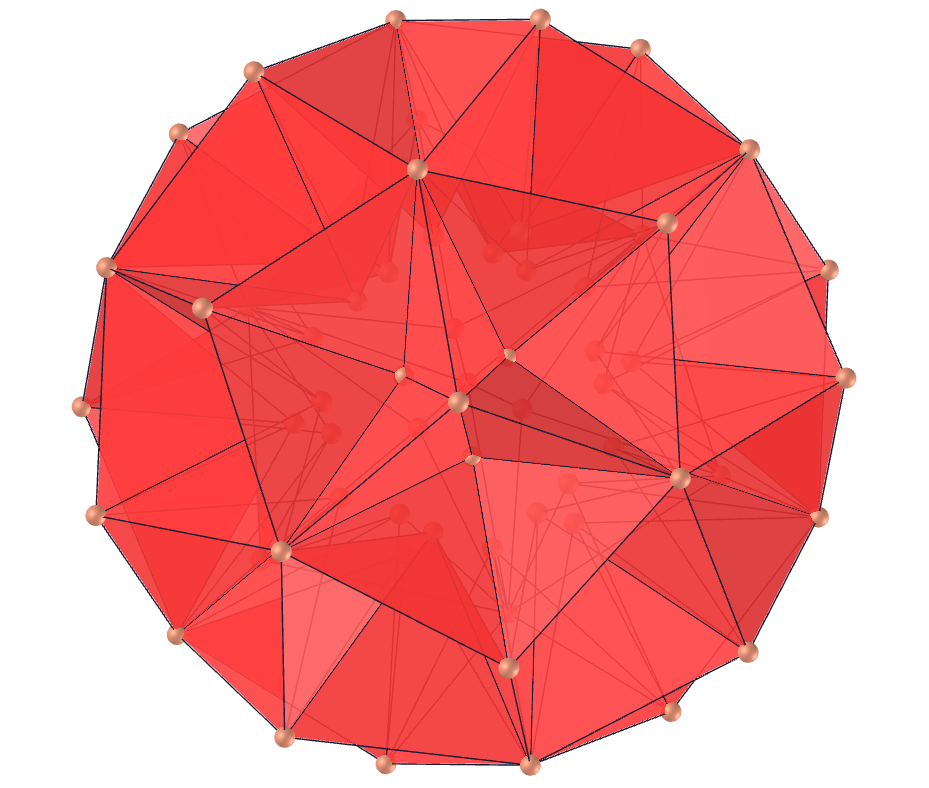
The 10-akis dodecahedron is a 120-faced Möbius deltahedron derived from the dodecahedron and the great rhombic triacontahedron.
faces: 120 | edges: 180 | vertices: 62

Non-convex deltahedra: visualization with Virtual Reality by Paulo Henrique Siqueira is licensed with a license Creative Commons Attribution-NonCommercial-NoDerivatives 4.0 International.
How to cite this work:
Siqueira, P.H., "Non-convex deltahedra: visualization with Virtual Reality". Available in: <https://paulohscwb.github.io/polyhedra3/deltahedra/>, June 2026.
References:
Weisstein, Eric W. “Archimedean Solid” From MathWorld-A Wolfram Web Resource. http://mathworld.wolfram.com/ArchimedeanSolid.html
McCooey, D. I. “Visual Polyhedra”. http://dmccooey.com/polyhedra/
Cundy, H. M. “Deltahedra”. Math. Gaz. v. 36, pp. 263-266, 1952
Kaufman, R. “The Cundy Deltahedra”. http://www.interocitors.com/polyhedra/Deltahedra/Cundy